Maritime geography is changing rapidly; the rules governing connectivity, access, and resilience are not keeping pace
This piece is part of the series 'Governing the Oceans: Rethinking Access and Equity'
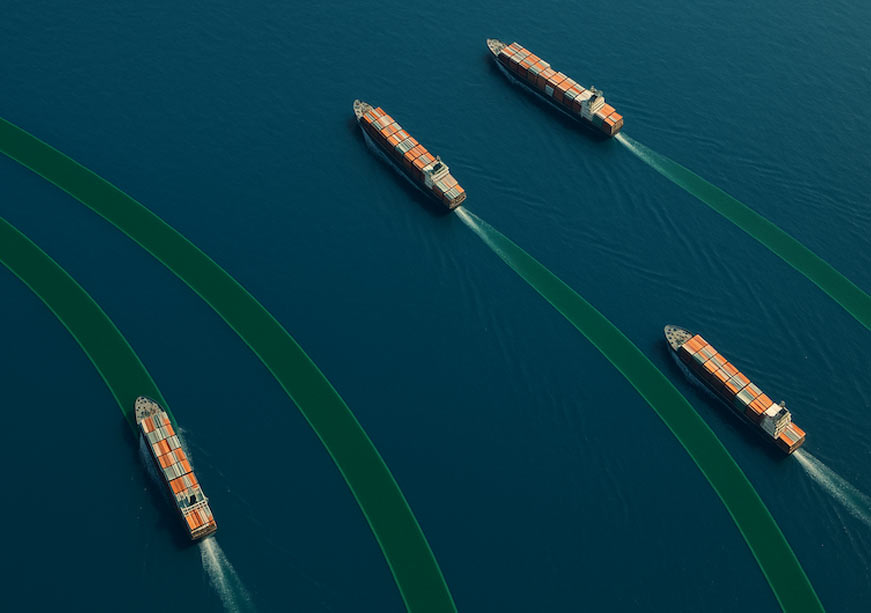
Maritime corridors and chokepoints have come under unusual pressure in recent years. In 2023 and 2024, drought reduced water levels in the Panama Canal and disrupted transit schedules. Since late 2023, attacks by Houthi forces have sharply constrained shipping through the Red Sea, despite a brief respite in 2025. In 2024, transits were down by 70 percent compared to 2022, according to UNCTAD. The Strait of Hormuz has now become another point of acute risk because of the war involving the United States, Israel, and Iran. Roughly 20–21 million barrels of oil per day normally pass through the Strait, representing about one-fifth of global petroleum consumption (EIA). At the same time, climate change is making routes that once seemed marginal—especially those through the Arctic—more commercially and strategically relevant. China and Russia are already treating the Northern Sea Route as part of that future.
Maritime corridors have become instruments of foreign policy, while much of the multilateral rulebook still treats them primarily as neutral infrastructure. Announced at the G20 Delhi Summit in September 2023, the India-Middle East-Europe Economic Corridor (IMEC) was not presented simply as a shipping lane. It bundled rail, ports, electricity, hydrogen pipelines, and data cables into a single political and economic package.
Maritime corridors have become instruments of foreign policy, while much of the multilateral rulebook still treats them primarily as neutral infrastructure.
The Memorandum of Understanding presented IMEC as a counterweight to China’s Maritime Silk Road, under which Chinese entities have established varying degrees of ownership or operational control over port projects worldwide. For example, Chinese state-owned shipping company Cosco acquired a 51 percent stake in the Piraeus Port Authority in 2016 and later increased its holding to 67 percent. Piraeus is Europe’s fifth-largest port. Sri Lanka leased Hambantota Port to China Merchants Port Holdings for 99 years in 2017 after being unable to service Chinese construction loans. AidData's dataset tracks nearly US$24 billion in Chinese state-directed loans and grants for 363 seaport-related projects supporting 168 ports in 90 countries from 2000 to 2025. However, the appeal of the Maritime Silk Road is not purely political. Many governments need ports, railways, and energy infrastructure, and China can often finance and build them quickly. Conventional maritime policy does not always take this demand-side dimension seriously enough.
A modern corridor is no longer just a route. It combines port concessions, financing terms, digital systems, customs procedures, security arrangements, and political commitments.
That matters because the politics of a corridor increasingly sit outside the sea lane itself. A modern corridor is no longer just a route. It combines port concessions, financing terms, digital systems, customs procedures, security arrangements, and political commitments. The United Nations Convention on the Law of the Sea (UNCLOS) provides the foundational legal framework for freedom of navigation, but it does not regulate the layers of sovereign finance, digital infrastructure, and political alignment that now sit atop the physical route.
Several of the world’s principal maritime chokepoints are now under stress at the same time. That is testing supply chains built on the assumption that major routes would remain reliably open. Besides the Red Sea and the Strait of Hormuz, the Strait of Malacca and the Taiwan Strait remain significant geopolitical risks. Roughly one-third of global shipping moves through the South China Sea alone. Overall, shipping carries about 80 percent of global trade by volume.
There is no clear multilateral mechanism for managing the cascading effects when one of these routes is disrupted. The International Maritime Organisation’s (IMO) mandate is primarily focused on vessel safety. UNCLOS protects navigational rights. But neither system is designed to decide who absorbs the costs when ships must reroute, insurance coverage tightens, and freight rates rise. Those costs fall hardest on import-dependent developing economies, where freight inflation, food-security vulnerabilities, and shrinking insurance access quickly become domestic political problems.
The Northern Sea Route (NSR) and the Indo-Pacific corridor system will shape the next two decades of maritime competition. Both currently operate under ad hoc, unilateral, or stalled governance arrangements. NSR cargo reached a record 37.9 million tonnes in 2024, according to Russian sources, still far below the state target of more than 200 million tonnes by 2030. Climate change is what makes this strategically relevant: September 2024 Arctic sea-ice extent was the seventh-lowest in the 46-year satellite record.
Russia regulates NSR transits unilaterally by invoking Article 234 of UNCLOS and extending it well beyond its intended scope. China has also worked its way into Arctic governance forums, describing itself as a “near-Arctic state”. The Indo-Pacific presents a different version of the same problem
For more than two decades, ASEAN and China have negotiated a Code of Conduct for the South China Sea without resolving the central disputes over geographic scope, enforcement mechanisms, or the role of external parties. The parties have set a target of concluding negotiations by 2026, but that remains uncertain. China declared the 2016 arbitral award issued by a tribunal constituted under Annex VII of UNCLOS void and has not changed its behaviour accordingly.
In practice, strategic competition does more than exploit weak governance. It can significantly constrain the possibility of agreement on new rules. This is not primarily a failure of UNCLOS, whose enforcement limitations were a deliberate political compromise built into the treaty in 1982. It is a reminder that even a strong legal framework has a limited effect when major powers reject its constraints.
The difficult question is not whether new corridors should be built. Many countries need infrastructure and cannot wait for perfect governance arrangements. The question is under what conditions these corridors remain open, interoperable, and politically neutral enough to serve global trade.
A useful first step would be a G20 Working Group on Maritime Corridor Standards. The G20 includes many relevant actors from both the Global North and the Global South. It is better placed than bilateral memoranda of understanding to address the systemic nature of the issue. The group should develop a voluntary code of conduct focused on three practical questions: Are the financing terms visible? Can the systems connect with others? And will commercial users have access on equal terms?
Transparent financing: clear terms for loans and port concessions, reducing the risk of debt dependency.
Interoperability: common digital and customs standards, so corridors do not become closed systems.
Fair access: non-discriminatory access for commercial shipping, consistent with WTO principles.
The point is not to replace UNCLOS, but to recognise what it was never designed to address. Before governments open or finance the next generation of maritime corridors, they need a clearer set of shared rules governing how those corridors will operate.
Matthias Catón is Chief Executive Officer at the German Maritime Centre.
The views expressed above belong to the author(s). ORF research and analyses now available on Telegram! Click here to access our curated content — blogs, longforms and interviews.

Dr. Matthias Catón is the Managing Director of the German Maritime Centre, Germany’s think tank for the maritime industry. The Centre works across ports, shipping, ...
Read More +


 PREV
PREV