Iran's threat to tax undersea cables in the Strait of Hormuz exposes the fragility of global digital infrastructure as well as the depth of India's strategic vulnerability
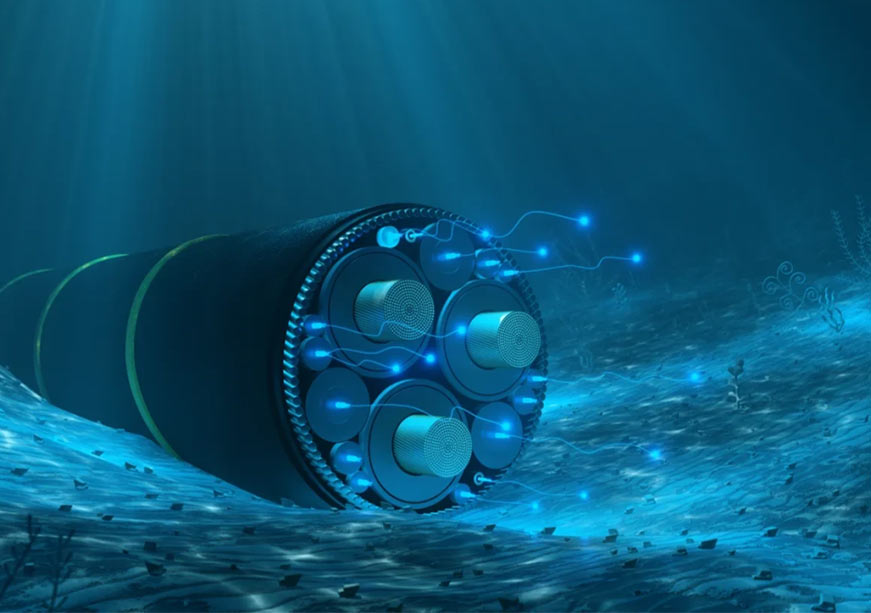
As the conflict between the United States and Iran enters a critical new phase, Tehran has begun to weaponise global digital infrastructure, a dimension of modern warfare that extends well beyond conventional military confrontation. The Strait of Hormuz, now de facto controlled by Iran and Oman, is emerging as a consequential digital chokepoint, with Iran demonstrating a calculated intent to leverage its geographical position over the undersea fibre-optic cables that underpin international internet connectivity.
In April 2026, the Islamic Revolutionary Guard Corps-affiliated Tasnim News Agency published a detailed mapping of undersea internet cables and cloud infrastructure across the Persian Gulf. This was swiftly followed on 9 May 2026 by Iranian military spokesperson Ebrahim Zolfaghari's declaration on X: "We will impose fees on internet cables." Together, these developments point to a deliberate and calculated attempt to coerce countries across the globe by threatening the foundations of their technological infrastructure. Should Iran proceed with this course of action, the consequences are expected to reverberate across the global digital economy, with a disproportionate burden falling on the connectivity infrastructure and technology sectors of several East African, Middle Eastern, and Asian countries, including India.
The three-pronged strategy outlined by Tasnim reveals Iran's intent to extract both economic and strategic value from its geographical position over the Strait. First, foreign companies would be required to pay licensing fees for the use of subsea cables passing through Iranian-controlled waters. Second, major technology corporations — with Meta, Google, Amazon, and Microsoft specifically named — would be "compelled to operate under the laws of the Islamic Republic of Iran", a stipulation that analysts suggest would, in practice, necessitate the establishment of joint ventures subject to Iranian regulatory oversight and state influence. Third, and perhaps most consequential from a long-term strategic standpoint, Iran proposes to monopolise the repair and maintenance of these subsea cable systems, positioning itself as the sole authority over the physical integrity of infrastructure upon which a significant portion of the world's digital communications depend.
The nations of the Middle East stand to bear the most immediate consequences of any disruption. Gulf states such as Qatar and Kuwait, which rely heavily on Hormuz-adjacent cable systems for international connectivity, would face significant degradation of communications and financial services.
Iran's primary legal justification for the proposed cable fees rests on Article 79 of the United Nations Convention on the Law of the Sea (UNCLOS), which grants coastal states the authority to establish conditions for cables and pipelines entering their territory or territorial waters. In support of this position, Iranian media have drawn on the precedent set by Egypt, which levies transit and licensing fees on undersea cables passing through the Suez Canal, presenting this as an established and internationally accepted model for sovereign revenue generation from digital infrastructure.
Whilst the prospect of Iran fully implementing its proposed cable fee regime remains uncertain — given the shaky legal premises upon which the threat rests — the threat itself carries sufficient strategic weight to warrant serious analytical attention. Seven significant undersea cable systems traverse the Strait of Hormuz, the most consequential of which is the Asia-Africa-Europe 1 (AAE-1) cable, which connects Southeast Asia, India, the Gulf region, Egypt, and Southern Europe. While these systems carry less than one percent of global international bandwidth, the nations whose international communications depend primarily on these routes would face profound consequences in the event of sustained disruptions.
Any damage to undersea cables in the Strait of Hormuz is unlikely to be repaired rapidly given the ongoing tensions in the area. In 2024, three cables were severed by the dragging anchor of a vessel struck by Iran-aligned Houthi militants, causing a disruption of approximately 25 percent of internet traffic between Asia and Europe. One of the severed cables required five months to repair, as specialised cable-laying vessels were unable to safely access the conflict zone for an extended period. A comparable scenario in the Strait of Hormuz — where active hostilities between the United States and Iran have already disrupted maritime traffic — would in all likelihood produce similarly protracted outages, compounded by the added complication of a more confined and heavily contested waterway.
The convergence of these actions suggests a calculated campaign to contest Western technological primacy through asymmetric, infrastructure-targeted means.
The nations of the Middle East stand to bear the most immediate consequences of any disruption. Gulf states such as Qatar and Kuwait, which rely heavily on Hormuz-adjacent cable systems for international connectivity, would face significant degradation of communications and financial services. Of particular note are the substantial artificial intelligence infrastructure investments undertaken by the United Arab Emirates and Saudi Arabia in recent years. These initiatives depend upon low-latency, high-bandwidth international data connections, and any sustained increase in latency resulting from cable damage or rerouting would materially impair the operational capacity of these emerging digital economies.
Viewed alongside the drone strikes on Amazon Web Services facilities across the Middle East in March 2026, Iran's cable fee proposals connect to form a larger picture. Rather than an isolated act of opportunism, these proposals appear to be part of a deliberate strategy targeting US-based technology giants and the digital infrastructure their global operations depend on. The convergence of these actions suggests a calculated campaign to contest Western technological primacy through asymmetric, infrastructure-targeted means.
Of the seven cable systems traversing the Strait of Hormuz, four are of direct and critical importance to India, routing internet traffic between the Indian subcontinent and the Gulf states, Europe, and Africa. These include the FALCON network, the Gulf Bridge International system, SeaMeWe-6, and AAE-1, with Indian telecommunications operators Bharti Airtel and Reliance Jio holding operational stakes in several of these systems. Approximately 60 percent of India's westward data traffic passes through this corridor, rendering the country acutely exposed to any sustained disruption of cable infrastructure in the Strait.
Approximately 60 percent of India's westward data traffic passes through this corridor, rendering the country acutely exposed to any sustained disruption of cable infrastructure in the Strait.
The sectors most immediately at risk span the breadth of India's modern economy. Banking and financial services, which rely on continuous low-latency data connections for transaction processing and interbank communications, would face significant operational impairment. Energy operations, many of which are digitally managed and linked to Gulf-based partners, would similarly be affected. Perhaps most gravely, disruption to military communications infrastructure at a time of heightened regional tension would carry serious national security implications, constraining India's situational awareness and its capacity for coordinated response in an already volatile geopolitical environment.
The most economically significant casualty of a sustained cable disruption, however, would be India's information technology and business process outsourcing sector, which constitutes one of the principal pillars of the economy. India's IT-BPO industry depends on uninterrupted, high-bandwidth data connectivity to service clients across Europe and North America. A 24-hour internet disruption could inflict losses as high as US$920 million on India's IT and services economy — a figure that underscores the extraordinary degree to which India's economic prosperity is contingent upon the continued integrity of undersea cable infrastructure.
A 24-hour internet disruption could inflict losses as high as US$920 million on India's IT and services economy — a figure that underscores the extraordinary degree to which India's economic prosperity is contingent upon the continued integrity of undersea cable infrastructure.
Beyond the immediate threat posed by Iran's proposals, India's structural dependence on the Strait of Hormuz corridor represents a pre-existing and enduring strategic vulnerability, one that has drawn increasing attention from policymakers and the private sector alike. In recognition of this exposure, Google announced a US$15 billion subsea cable initiative at the AI Impact Summit in India in 2026, designated the "America-India Connect" project. The initiative will establish new international subsea gateways connecting India to Singapore, South Africa, and Australia, effectively creating alternative data corridors across four continents that circumvent the Hormuz corridor entirely. Whilst the project represents a significant step towards diversifying India's international connectivity, its long-term infrastructural timeline means that India remains substantially dependent on cable systems passing through the Strait of Hormuz for the foreseeable future. The Iran threat has thus accelerated a strategic conversation that India's digital ambitions had already rendered unavoidable.
Iran's proposed taxation of undersea cables in the Strait of Hormuz forms part of a broader, targeted assault on Big Tech — and marks a new dimension of cyber warfare. Should this threat be realised, the greatest burden of disruption would fall on the Middle East and India. For India, it lays bare a structural vulnerability at the heart of its digital economy, with ramifications extending from its IT-BPO sector to its national security apparatus. Addressing this weakness cannot be achieved in the short term. While plans to diversify submarine cable routes are already underway, coordinated action at scale — encompassing multilateral legal frameworks and accelerated investment — will be imperative over the coming decade.
Pranoy Jainendran is a Research Assistant with the Centre for Security, Strategy and Technology at the Observer Research Foundation.
The views expressed above belong to the author(s). ORF research and analyses now available on Telegram! Click here to access our curated content — blogs, longforms and interviews.

Pranoy Jainendran is a Research Assistant with ORF’s Centre for Security, Strategy & Technology. His work examines how technology shapes State institutions, national and international affairs, ...
Read More +


 PREV
PREV