The Defence Cable is ORF’s monthly insight on military affairs and defence technology, analysing key developments from around the world.

India’s Defence Minister Rajnath Singh recently concluded his visits to South Korea and Vietnam, cementing regional defence ties under India's Act East policy.
In Seoul, India and South Korea inked Memoranda of Understanding (MoUs) in key sectors of defence cooperation and discussed a roadmap for the Defence Innovation Accelerator Ecosystem (KIND-X). Agreements were also signed between L&T, India, and Hanwha Co., Ltd., Korea, to boost collaboration between the two nations’ defence industries.
India and Vietnam also underscored the importance of maintaining peace, stability, and freedom of navigation in the Indo-Pacific, and resolved to pursue joint production of military hardware. Both countries signed agreements on cooperation in artificial intelligence (AI) and quantum technology, which included plans to establish an AI lab at the Telecommunications University in Nha Trang.
During the visit, Vietnam reiterated its interest in procuring the BrahMos weapons platform from India at an estimated cost of US$700 million. A few days later, at the Shangri-La Dialogue in Singapore, India’s defence secretary confirmed the deal. This makes it the third ASEAN buyer of the Indo-Russian supersonic cruise missile after the Philippines, which purchased it in 2022 for US$375 million, and Indonesia, which remains in the final stages of a negotiated purchase of the system from India at a reported cost of US$340 million. The Brahmos missiles debuted in combat during Operation Sindoor last year in India’s short conflict with Pakistan, proving their effectiveness.
Read More: India and Southeast Asia: Mapping Strategic Convergence in an Era of Great-Power Competition – ORF and RSIS; Shaping China’s periphery: BrahMos missiles in Southeast Asia – Atul Kumar (ORF).

Source: Authors’ Illustration generated using ChatGPT 5.5, based on visuals from Brahmos Aerospace website, and data from Center for Strategic and International Studies’ (CSIS) Missile Defense Project.
Indian defence company Larsen & Toubro (L&T) has entered into a strategic collaboration with France’s Exail to deliver an advanced Unmanned Mine Counter-Measure (MCM) Suite for the Indian Navy’s Mine Counter Measure Vessels (MCMVs) programme. The collaboration would encompass autonomous maritime systems, integrated software platforms, and synthetic aperture sonars. When used together, these systems are designed to detect, classify, identify and neutralise naval mines in a safe, stand-off manner. The release further stated that the unmanned MCM suite will comprise the Indian Navy’s upcoming programme for 12 Mine Counter Measure Vessels, with India’s Ministry of Defence (MoD) intending to procure 12 MCMVs at a cost of ₹45,000 crore (about US$ 5 billion). India currently lacks a dedicated minesweeper and has sought to procure a new class of MCMVs since retiring its last minesweeper, the Soviet-built Natya-class INS Kozhikode, in 2019.
The defence collaboration is notable for several reasons. First, it underscores a key flagship strategic venture in the Indian Navy’s transition to unmanned systems. Second, it helps to plug a crucial gap in its mine-hunting capabilities, which the ongoing conflict in Iran has highlighted. Third, the partnership reflects the deepening strategic collaboration between India and France in co-developing next-generation military technology. Notably, Exail’s MCM technologies are already in operation with the Belgian Navy’s and the Royal Netherlands Navy’s Vlissingen-class ships.

Source: Authors’ Visualisation generated using ChatGPT 5.5, based on Exail’s Unmanned MCM Integrated System.
Read More: The India-France Defence Connect – Harsh V. Pant (ORF).
American news portal Axios has reported on growing tensions between data analytics behemoth Palantir and the US’s principal military intelligence service, the Defence Intelligence Agency (DIA). The dispute stems from the DIA’s efforts to diversify the private sector contractors it works with as the Department of War seeks to modernise its intelligence processing systems. Accusing the Pentagon of “wasting taxpayer money” by pursuing in-house solutions rather than Palantir’s suite of products, the dispute reflects the tech giant’s greater bullishness about deepening its presence and influence within the US national security apparatus. The standoff highlights underlying tensions between Washington’s political establishment and the defence-tech base sustaining its military infrastructure.
The tensions also highlight the outsized role of advanced AI driven by Palantir and other AI giants in shaping US military and intelligence activities worldwide. Driven by Secretary of War Pete Hegseth’s intent to transform the US military into an “AI-first fighting force”, the Pentagon has undertaken efforts to accelerate and expand the use of AI at all levels of its work. Since 2026, the growing role of private AI and data analytics giants has been a focal point of US strategy. The special forces raid to capture and abduct Venezuelan President Nicolas Maduro relied on Palantir’s use of AI firm Anthropic’s Claude code to coordinate military assets by relaying and synthesising intelligence in real-time for upstream and downstream consumption. A spokesperson for Anthropic declined to comment on whether Claude was used in the operation.
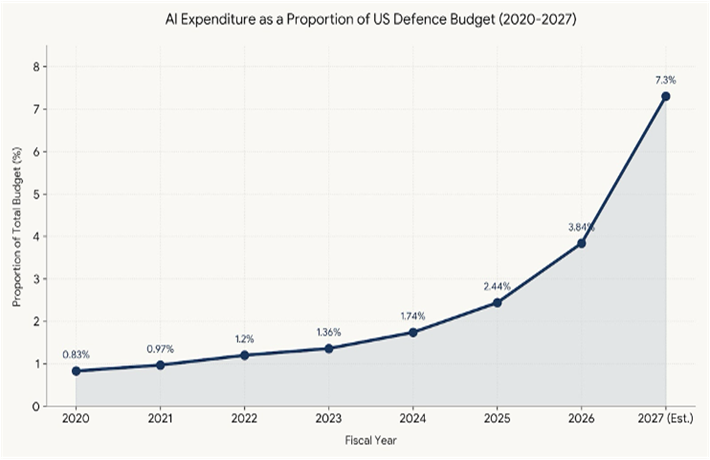
The Pentagon has also tapped OpenAI for a US$100 million contract to equip the US military’s swarm drones with voice-controlled software for future conflicts. Palantir’s Maven Smart System also came to play a central role in increasing the pace and scale of US-Israeli strikes against Iran, truncating kill chains and handing Washington and Tel Aviv a tactical advantage in the war’s early stages. The Pentagon’s request for US$30 billion in 2027 to upgrade to next-generation AI-powered supercomputers under its ‘AI Arsenal Initiative’ reflects a broader focus on enhancing US military power by prioritising frontier technologies.
Yet the Pentagon’s AI push remains stymied by tussles with the private sector. It is at loggerheads with Anthropic over the company's reluctance to support US defence missions. As Washington seeks to equip its global military power with frontier technologies and language models developed by domestic tech giants, it will need to place greater focus on the dynamics that define this public-private partnership.
Fig 1: Authors’ Chart of Market Share of Pentagon AI Contracts (Rendered with Google Gemini).
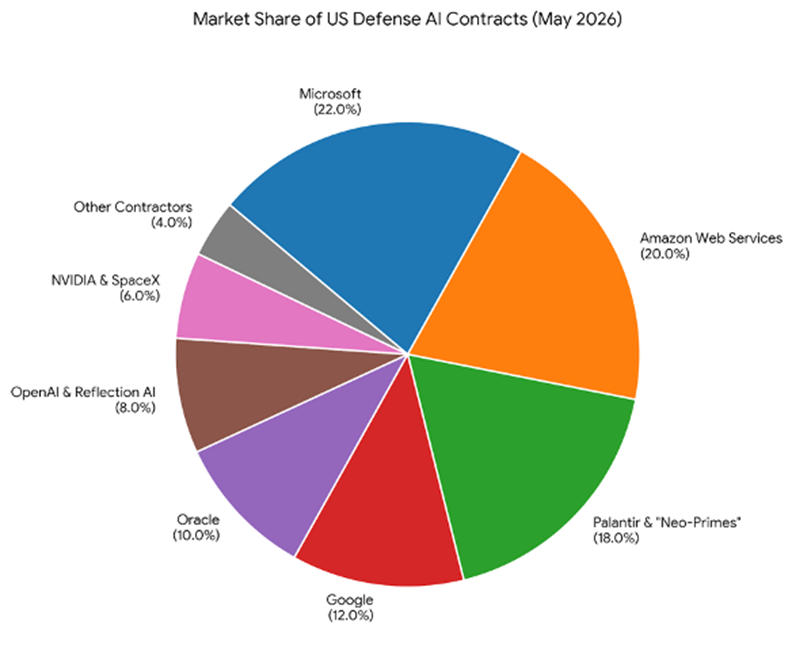
Figure 2: Authors’ Graph on Pentagon AI Expenditure as a proportion of total budget (Developed with Google Gemini).
Russian nuclear forces conducted a massive military exercise using nuclear submarines, aircraft, ships, hundreds of missile launchers and associated platforms. The Russian defence ministry claimed that around 7,800 types of equipment and weapons, along with 65,000 troops, took part in this strategic nuclear exercise. The joint exercise with Belarus included launches of ballistic, hypersonic, and air-launched cruise missiles, during which the Belarusian Armed Forces launched an Iskander-M missile from the Kapustin Yar test range, and a Yars intercontinental ballistic missile from the Plesetsk spaceport at the Kura test range in Kamchatka. The Russian Navy launched the Tsirkon and Sineva missiles. At the same time, the Russian Air Force displayed Tu-95MS long-range aircraft that fired air-launched missiles, alongside MiG-31I aircraft, which launched a Kinzhal hypersonic missile.
A key feature of the exercise is the Iskander-M nuclear-capable missile, a tactical road-mobile short-range ballistic missile (SRBM) with a range of up to 500 km, capable of launch from common support vehicles. The conventionally armed version of the missile has been used widely by Russian forces in Ukraine, even outmanoeuvring advanced air-defence systems like the Patriot. Russia has moreover repeatedly indicated the deployment of the Iskander against frontline European positions to counter NATO’s ballistic missile defence, with some notably having been positioned in its Kaliningrad exclave, as per reports, close to key European cities.

Source: Authors’ Visualisation generated using ChatGPT 5.5, based on information from CSIS Missile Defense Project and The Missile Defense Advocacy Alliance (MDAA).
The Pakistan Navy is reportedly upgrading from a 300 km-class subsonic missile to an indigenously developed supersonic system with a range exceeding 500 km. The system under evaluation is the SMASH (Supersonic Missile Anti-Ship), also designated as the P282; it was first tested in November 2024, when it was launched from a Zulfiquar-class (F-22P) frigate. Derived from the Fatah-2 short-range ballistic missile, the P282 marked Pakistan’s foray into advanced anti-ship ballistic missile (ASBM) technology. The upgrade of the system is likely to strengthen Pakistan’s Anti-Access/Area-Denial (A2/AD) capabilities in the Arabian Sea. The missile is presented as a capability intended to threaten high-value naval assets, including Indian aircraft carriers. However, the strategic impact also depends on Pakistan’s ability to build an effective targeting and surveillance network capable of tracking moving naval assets at long distances. Therefore, while the development could increase tactical challenges for India, it is unlikely to fundamentally alter the broader regional naval balance.
The P282 is the second anti-ship missile system developed by Global Industrial & Defence Solutions (GIDS), a Pakistani state-owned defence conglomerate. Preceding the P282, the Harbah anti-ship cruise missile was developed by GIDS and later deployed by the Pakistani Navy on its Azmat-class patrol craft.

Source: Authors’ visualisation generated using ChatGPT 5.5, based on information from Janes, Quwa, and Defence Watch.
The views expressed above belong to the author(s). ORF research and analyses now available on Telegram! Click here to access our curated content — blogs, longforms and interviews.

Tuneer Mukherjee is a Non-Resident Associate Fellow with ORF’s Strategic Studies Programme. His research focuses on maritime security, with a particular emphasis on naval warfare ...
Read More +
Archishman Ray Goswami is a Non-Resident Associate Fellow with the Strategic Studies Programme at the Observer Research Foundation, New Delhi. His work focusses on the intersections ...
Read More +


 PREV
PREV