
Source: PPAC
India's exposure to the natural gas volume and price crisis arising from the blockade of the Hormuz Strait is acute, multi-dimensional, and largely structural - rooted in geographic concentration of import sources, inadequate storage, and price sensitivity that limits access. Over the last decade, natural gas has been promoted as a “bridge fuel” for industrial decarbonization, urban cooking, transport, and power generation. However, the Hormuz disruption has demonstrated that imported gas can simultaneously support emission reduction but increase vulnerability to geopolitical disruptions. In energy security terms, India’s gas system proved substantially more vulnerable than its oil system. The disruption, therefore, immediately translated into a physical contraction in gas availability rather than merely a price shock. The impact was magnified because LNG (liquefied natural gas) markets are less fungible than oil markets. Oil cargoes can often be rerouted relatively quickly from multiple producing regions, whereas LNG depends on long-term contracts, dedicated liquefaction capacity, regasification scheduling, and specialised shipping fleets.
India imports roughly half of its natural gas requirement in the form of LNG. More than half of India's imports are sourced from West Asian countries (Qatar, UAE, Oman). Over 80 percent of India's LNG imports come from just five exporters from West Asia. Qatar alone accounts for nearly half of LNG imports. India’s LNG procurement strategy has shifted rapidly toward supply diversification. Additional cargoes are sought from the United States (US), Australia, Russia, and East Africa. However, these substitutions face major limitations. US LNG cargoes involve significantly longer voyage durations and higher shipping costs. Russian Arctic LNG projects remain constrained by sanctions and logistical bottlenecks. African LNG projects lack sufficient spare export capacity. Therefore, diversification could only partially offset lost West Asian volumes. The crisis has strengthened support for pipeline diversification projects, including a proposed subsea Oman–India gas pipeline intended to bypass the Strait of Hormuz chokepoint.
The crisis has exposed several longstanding structural gaps, of which the limited strategic gas storage capability is critical. Unlike crude oil, where India possesses strategic petroleum reserves, the country has minimal strategic LNG storage infrastructure. India currently has only about two to three weeks of effective LNG buffering capacity distributed across existing regasification terminals. This lack of storage is amplifying gas market volatility because disruptions are instantly translating into downstream supply stress.
India is a highly price-sensitive LNG importer that limits spot purchases because many gas-consuming sectors cannot absorb elevated fuel costs. A significant share of India’s LNG imports is Brent-indexed with a three-month lag, which means a spike in crude oil prices simultaneously lifts oil import costs and LNG contract prices, creating a dual physical and financial shock. The Platts JKM (Japan Korea Marker) benchmark for spot LNG cargoes in Northeast Asia surged to US$15.07/MMBtu (metric million British thermal units) immediately after the conflict began, then increased by 70 percent in a single day to about US$25/MMBtu on 3 March 2026, the largest daily surge since March 2022. As of 21 May 2026, the JKM price averaged over US$18/MMBtu. With Brent crude prices increasing by over 50 percent, contract prices for Indian LNG buyers are expected to increase from June 2026 onward. Spot LNG prices around US$20/MMBtu and daily charter rates for LNG carriers exceeding US$200,000 in the Atlantic Basin are eroding natural gas’s price competitiveness compared to alternatives. India's total LNG import value reached over US$13 billion in 2025-26. Elevated prices through 2026 could increase this by 40 to 70 percent, placing additional pressure on India's current account and fiscal balances. If regulated fuel price caps are raised, it will shift the burden onto fiscal balances rather than directly onto consumers. This will cushion the impact of price increases on households but transfer the burden to corporate margins and fiscal accounts. Costly spot cargoes add to India’s fiscal burden. Eventually, gas price shocks will transmit to India's economy through a broad channel, as LNG powers fertiliser plants, city gas networks, and an expanding industrial gas user base.
In response to the crisis, India has imposed demand-side restrictions at considerable economic cost. Priority allocation of natural gas for critical sectors such as domestic LPG (liquefied petroleum gas) and domestic CNG (compressed natural gas for piped natural gas (PNG)) has come at the cost of reductions in supply to energy-intensive industrial sectors, including refining, petrochemicals, glass, and ceramics that are heavily dependent on imported LNG. Reduction of production from these industries will have a negative impact on the broader economy. Industrial fuel switching options remain unavailable to most industries.
The petrochemical sector faces a particularly severe squeeze because LNG shortages are coinciding with disruptions in LPG and naphtha flows from the Gulf. Gas-based petrochemical producers are encountering both feedstock scarcity and price inflation simultaneously. The resulting effects are propagating into fertiliser, plastics, packaging, synthetic fibres, and chemical intermediates. This is creating a “cross-fuel substitution bottleneck,” where shortages in one hydrocarbon chain amplify stress across adjacent energy and industrial systems.
The fertiliser sector is among the first to face pressure. India’s urea industry depends heavily on natural gas as feedstock, and several plants are shifting to lower utilisation rates due to uncertainty over gas supplies and elevated spot LNG prices. Industrial consumers, including ceramics, glass, petrochemicals, and small manufacturing clusters, are experiencing curtailed gas supply and sharply rising procurement costs.
For India, industrial gas curtailments are likely to persist. Physical supply constraints, elevated spot prices, and oil-indexed contract price increases from June 2026 suggest India is likely to face double-digit percentage increases in delivered LNG costs through the remainder of 2026, with consequential impacts on fertiliser subsidies, industrial competitiveness, and household LPG and CNG costs.
Short-term responses such as expensive spot purchases and demand curtailment will address immediate needs but will not resolve structural vulnerabilities. Long-term remedies, including expanded strategic storage, accelerated diversification, development of domestic gas production, and reduced dependence on oil-indexed pricing, remain urgent priorities. The fundamental lesson is unambiguous. Energy security in an era of heightened geopolitical risk requires not only supply diversity but strategic reserves, pricing flexibility, and the infrastructure to withstand prolonged chokepoint closures.
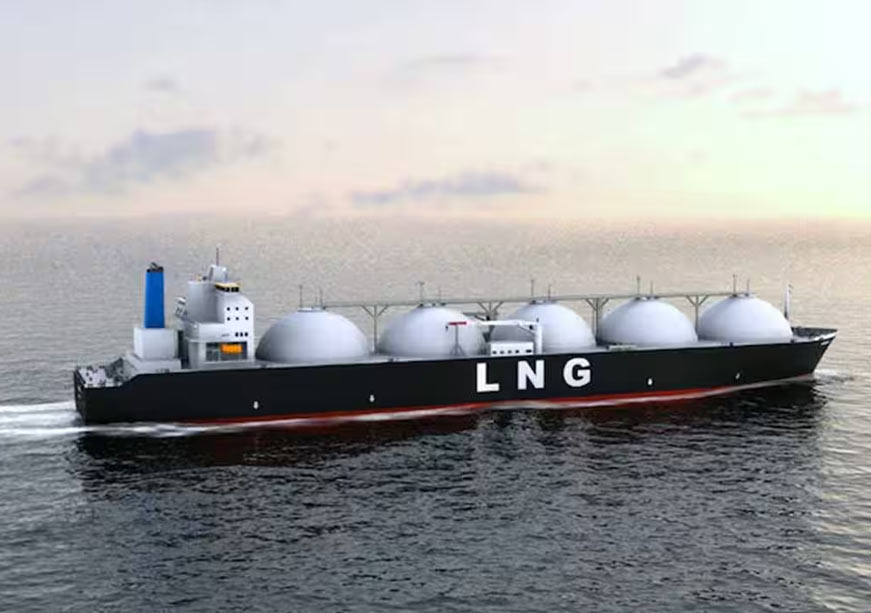
LNG
India has marked a significant step in global energy infrastructure exports, with the first batch of specialised liquefied natural gas (LNG) storage tanks dispatched from Kandla Port for a mini-LNG terminal project in Nassau, Bahamas. The shipment, led by INOX India Ltd, highlights the country’s growing role in delivering complex, high-value engineering solutions worldwide. The tanks are part of a major project being developed for Island Power Producers in the Bahamas. Once completed, the facility will support island-based power generation using LNG, offering a cleaner and more efficient energy alternative. The consignment includes advanced cryogenic tanks designed for safe storage and handling of LNG, along with a regasification system. The project represents one of the largest installations of shop-built, double-walled vacuum-insulated LNG tanks globally. A total of 10 high-capacity tanks are being supplied under what is described as INOXCVA’s biggest LNG order to date.
CGD/CNG
India’s Adani Total Gas reported a rise in fourth‑quarter profit, supported by higher compressed natural gas (CNG) demand and steady growth in household piped natural gas (PNG) connections, which lifted overall volumes. The company is a joint venture of the Adani Group and French oil major TotalEnergies SE. Its consolidated net profit rose about 9 percent to INR1.68 billion (bn) (US$17.84 million (mn)) in the three months ended 31 March. CNG sales volumes, which account for over half of total sales, rose 17 percent during the quarter, driven by sustained demand from the transport segment and a rise in outlets. Piped natural gas, Adani Total’s second-biggest segment, logged a 5 percent increase in sales volumes at 91 million standard cubic meter of gas per day (mmscmd). India in March ordered faster approvals for new gas pipelines, deeming permissions granted if authorities fail to respond, helping lift household piped gas additions to about 580,000 that month from roughly 342,300 a year earlier. Natural gas sourcing costs for Adani Total Gas rose 17.8 percent, contributing to an 18 percent rise in its total expenses to 1INR4.92 bn. Total revenue from operations rose 16.5 percent to INR16.95 bn (US$179.3 mn).
India has accelerated its shift to PNG, with more than 5.01 lakh new PNG connections gasified since March and over 5.68 lakh consumers registering for fresh connections, even as authorities manage LPG (liquefied petroleum gas) supplies amid geopolitical disruptions. With the war in West Asia disrupting cooking gas LPG supplies, the government is pushing households as well as industries to move to PNG — a more convenient alternative whose supplies have not been very badly hit. LPG users within the reach of a PNG connection have been asked to shift, while orders have been issued for expediting approvals for laying of pipelines that supply gas to burner tips.
From police stations to fast-food outlets, Indraprastha Gas Ltd is expanding its push for PNG connections in Delhi-NCR as it looks to rapidly expand its user base to ease pressure on cooking gas LPG. Following disruptions to energy supplies from the West Asia conflict, the government is pushing wider adoption of PNG as a convenient alternative to LPG, given its more diversified sourcing and lower dependence on the Gulf region.
Compressed natural gas (CNG) has become costlier across the Mumbai Metropolitan Region (MMR), with Mahanagar Gas Ltd (MGL) hiking the retail price by a rupee per kg (kilogram). The revision takes the CNG rate to INR82 per kg in Mumbai, Thane, Navi Mumbai and other parts of the region, impacting a large section of daily commuters as autos, taxis and buses continue to rely heavily on the fuel. As per Mumbai Rickshawmen Union, the increase in gas prices will lead to rise in operational costs as the fuel has become expensive over the past year. The union may also seek a minimum one rupee hike in autorickshaw fares, with the fuel rates going up. Over the past year, the CNG vehicle population in the Mumbai region has risen by around two lakh vehicles — a 20 percent jump — taking the total to over 12 lakh. Vehicle registrations indicate the scale of dependence on CNG in public transport and last-mile connectivity. The CNG fleet in MMR includes about 4.7 lakh auto-rickshaws and over 1.6 lakh taxis, along with more than five lakh private cars spread across Mumbai, Thane, Mira-Bhayander, Navi Mumbai and Raigad.
Policy & Governance
A renewed push to locate the headquarters of a proposed INR122.15 bn (US$1.29 bn) synthetic natural gas (SNG) project in Nagpur has gathered momentum, with Union Minister Nitin Gadkari urging top officials of Coal India Ltd (CIL) and Bharat Petroleum Corporation Ltd (BPCL) to consider the move. The proposal, led by the Association for Industrial Development (AID), seeks to relocate the project’s administrative base from Mumbai to Nagpur, arguing that proximity to the plant site and regional balance make a compelling case. AID recently submitted a representation outlining these factors, prompting Gadkari’s intervention. The SNG project, based on coal gasification technology, is planned at Majri in Bhadravati tehsil of Chandrapur district. Conceived as a joint venture between the two public sector companies, the project is expected to generate employment for around 3,000 skilled and semi-skilled workers, adding to the region’s industrial base.
Europe
According to the European energy regulators' agency ACER, European Union (EU) countries are set to fall short of the bloc’s requirement to fill gas storage to 90 percent of capacity before next winter, because of the Iran war’s disruption to global fuel markets. Countries should be able to reach a lower 80 percent filling level - a flexibility the EU rules allow in difficult market conditions, ACER said. But it said that hitting this level “will likely come at a premium cost” and be vulnerable to supply disruptions. Filling storage to 90 percent would require the EU to increase its LNG imports by 13 percent compared with 2025, ACER said. That will be difficult given tight global supplies. The Iran war has upended global gas markets by effectively closing the Strait of Hormuz, which usually transits around 20 percent of the world’s LNG. While most of the EU’s gas imports come from outside the Middle East - from Norway and the US (United States) - the disruption to global supplies has forced European buyers to compete with those in Asia for flexible LNG cargoes, and increased European gas prices by around 40 percent. Europe’s current reserves of stored gas are unusually low, after a cold winter. The current high prices are deterring companies from buying gas for storage. EU gas storage is currently 31 percent full, the lowest level for this time of year since 2022, when Russia slashed gas supplies to Europe, Gas Infrastructure Europe data showed. Gas from storage typically covers up to a third of EU gas demand in winter. The European Commission has urged governments to start refilling gas storage as soon as possible, and said it will step in to coordinate countries' efforts to avoid them rushing to buy gas at the same time and causing new price spikes.
Slovakia will file a lawsuit in the coming days challenging the EU’s decision to ban Russian gas imports, adopted by a qualified majority, and will seek a preliminary injunction, Prime Minister (PM) Robert Fico said. The ban on Russian gas imports, to be implemented by late 2027, was cleared by a reinforced majority of countries, allowing the EU to overcome opposition from Slovakia and Hungary when it approved the measure earlier this year.
France’s proposal to cap profit margins on transport fuels sold throughout the country’s service stations prompted an immediate backlash from the distribution industry. The French government had submitted for consultation a draft decree that would fix prices to ensure fuel distributors did not earn margins higher than those seen in January and February, based on a sliding five-day average of wholesale prices at Rotterdam.
United States oil major ExxonMobil, Energean and Helleniq Energy will sign a contract with Stena Drilling to start exploratory drilling in a western Greek offshore block, Greece’s energy ministry said. ExxonMobil, Energean and Greece’s biggest oil refiner Helleniq announced an agreement last year to explore for natural gas in Block 2 in the Ionian Sea. The consortium will proceed with exploratory drilling in February 2027, the ministry said, the country’s first offshore exploration drilling in 40 years. Europe is attempting to diversify its energy sources as it seeks to replace Russian gas following Russia’s invasion of Ukraine.
Ukraine plans to have 14.6 bcm of natural gas in underground storage for the 2026-2027 heating season, Energy Minister Denys Shmyhal said. Ukraine had about 13.2 bcm of gas in storage facilities before the start of the previous heating season in October 2025. Shmyhal did not specify how much gas Ukraine currently has in storage or how much it intends to import. Shmyhal noted that Ukraine’s state energy firm Naftogaz and the Ukrainian Gas Transmission System Operator were already working on the issue of reserving potential capacity for natural gas imports and extending the validity of the so-called Vertical Gas Corridor. After Russia stepped up its attacks on Ukrainian gas production late last year, Ukraine, which previously imported only small volumes of gas, was forced to increase daily imports to around 24 million cubic meters (mcm). However, it sharply cut gas imports starting 1 April, and analysts said they would likely remain low at least through April, with purchases possibly increasing if prices on the European market decline. Kyiv-based ExPro consultancy analysts said this month that Ukraine ended the 2025/26 heating season on 10 March and gas reserves in storage stood at 9.5 bcm, 1.6 times higher than a year earlier. Analysts said Ukraine can acquire the gas needed for the next heating season from domestic production, without resorting to costly imports. Ukraine sharply cut its natural gas imports on 1 April, and analysts said they would likely remain low at least through April, with purchases possibly increasing if prices on the European market decline. The war in Iran has sent global gas and oil prices surging. Data from the gas transmission system operator showed Ukraine planned to import 0.8 million cubic meters (mcm) of gas import, exclusively from Poland, against 23 mcm. In the January-to-March period, Ukraine received gas from Poland, Hungary, Slovakia and Romania. After Russia stepped up its attacks on Ukrainian gas production late last year, Ukraine, which previously imported only small volumes of gas, was forced to increase daily imports to around 24 mcm. Ukraine ended the 2025/26 heating season on March 10 and gas reserves in storage stood at 9.5 billion cubic meters (bcm), 1.6 times higher than a year earlier.
Italy will begin receiving LNG from the Golden Pass LNG facility in the US, a joint venture between QatarEnergy and Exxon Mobil, from June. The LNG tankers from the United States will help Italy plug a potentially costly supply gap due to disruptions from Qatar linked to the US-Israeli war against Iran. Italy is already receiving LNG from the United States but these cargoes would mark the first LNG coming from Golden Pass facilities in Texas to Italy's Adriatic LNG terminal. In March, US exports of LNG rose to an all-time high as plants ran above nameplate capacity and new units started up, financial firm LSEG data showed. Exxon Mobil said gas exports from Golden Pass LNG would start in the second quarter of this year.
Spain’s Repsol and Italy’s Eni are seeking to increase production at Venezuela’s Cardon IV gas field to 645 million cubic feet per day. The field currently produces about 580 million cubic feet per day. Venezuela’s vice minister for gas Cindy Rondon said the country needed to speed up repairs to gas infrastructure.
Africa/ Middle East
UAE (United Arab Emirates)’s Abu Dhabi National Oil Company (ADNOC) is planning to invest tens of billions of dollars to build a natural gas business in the US. The company is reviewing 29 potential deals aimed at creating a vertically integrated global gas business. The strategy is to diversify ADNOC’s overseas investment arm XRG’s commodity exposure by operating across the entire gas value chain. XRG is weighing options to create a business that would meet rising global demand for LNG and the growing US demand to power data centres.
Libya’s National Oil Corporation (NOC) has begun trial operation of a long-delayed gas pipeline aimed at easing production bottlenecks and supporting future exports, the company said. The North African country, the continent’s second-largest oil producer and a member of OPEC (Organization of the Petroleum Exporting Countries), relies heavily on hydrocarbons, but its ability to attract foreign investment and expand output has been hampered by years of political and economic turmoil since 2011. In recent months, NOC has sought to reverse that trend, announcing new oil and gas discoveries and awarding exploration blocks in its first licensing round since 2007, signalling a renewed push to bring in international partners as the nation looks to boost production to 1 billion standard cubic feet per day and raise exports to Europe by the early 2030s. The new 42-inch pipeline links the Intisar A/103 field to the Brega gas distribution network over about 130 km (80 miles). NOC said it would enable the recovery of about 150 million cubic feet of gas per day that had previously been flared, boosting supplies to domestic consumers and freeing up volumes for export. Libya holds an estimated 80 trillion cubic feet (tcf) of gas reserves, but exports via the Greenstream pipeline to Italy remain limited.
Israel’s energy ministry said that it had instructed Energean to begin resuming operations at the Karish natural gas platform off Israel's Mediterranean coast following the US ceasefire with Iran. The platform has been closed since 28 February, when the US-Israeli war with Iran began, due to safety concerns. Energean confirmed it had received notice from the energy ministry that would permit the safe restart and resumption of production and operations at its Karish site. Israel’s offshore Leviathan gas field also resumed operations after a month-long war shutdown.
QatarEnergy is preparing to restart LNG production. In March, QatarEnergy halted production of LNG and associated products due to military attacks on facilities in Ras Laffan and Mesaieed. The company has restarted two out of three trains at QELNG North 1 (Qatargas-1). QELNG North 1 is Qatar’s first-ever LNG project and is located in Ras Laffan Industrial City. The facility includes three conventional liquefaction trains with a combined capacity of approximately 10 million tonnes per annum (mtpa) of LNG.
Oil and gas producer Energean is spending about US$10 mn a month to keep its shut-in Israeli offshore operations on standby, and its more than US$1 bn Katlan project will be delayed if the Iran war lasts beyond May. Before the shutdown, Energean produced 15,000 barrels per day (bpd) of oil alongside gas. Following facility upgrades, production will hit 20,000 bpd upon restart, helping offset deferred income. The planned May launch of Katlan, which was discovered by Energean in 2022 near two other projects it owns off Israel’s coast, will be delayed if the war has not been resolved by then though there will be no material impact if it ends sooner. Regional supply squeezes and Egyptian domestic gas shortages mean Egypt, Israel, Jordan, and their neighbours need over 100 bcm of gas annually. Energean has booked capacity to supply 1 bcm of gas annually from Israel to Egypt through a planned pipeline, which remains significantly cheaper than imported LNG.
North and South America
Camuzzi Gas Inversora and Vitol signed a memorandum of understanding (MoU) for Argentina’s LNG del Plata project, the Argentine firm said, with Vitol potentially acquiring up to 100 percent of production and evaluating an equity investment. The project, currently wholly owned by Camuzzi, is located at the Port of La Plata in Buenos Aires province and will require an investment of US$3.9 billion over the next 20 years.
Canada has approved a C$4 bn (US$2.93 bn) expansion of Enbridge’s Westcoast natural gas pipeline system in British Columbia, the first major pipeline project to get the go-ahead under Prime Minister Mark Carney. Enbridge has been developing its Sunrise Expansion project, which will add 300 million cubic feet per day of natural gas capacity in B.C., since 2022, and applied for federal regulatory approval two years ago. Enbridge will build Sunrise to meet rising B.C. natural gas demand, including from LNG projects such as Woodfibre, which is under construction on the Pacific coast and of which Enbridge owns 30 percent. Enbridge’s Westcoast natural gas pipeline system stretches 2,900 kilometres (1,802 miles) from northeast British Columbia to the Canada-US border, with a current capacity of 3.6 billion cubic feet (bcf) of natural gas per day. The expansion will involve constructing new pipeline segments along the existing system, additional gas compression capacity and upgrades and changes to existing facilities. Construction is scheduled to begin in July, with a targeted in-service date in late 2028.
US Energy Secretary Chris Wright said he believes gas prices have peaked but predicted that they may stay above US$3 per gallon until next year. Gas prices have risen during the US and Israeli war on Iran and Iranian attacks on nearby countries, creating political headwinds for President Donald Trump ahead of the November midterm elections, where his Republican Party will defend slim majorities in the Senate and House of Representatives.
US energy company Williams Companies CEO (chief executive officer) Chad Zamarin said the long-delayed Constitution natural gas pipeline from Pennsylvania (PA) to New York (NY) could be operational as soon as the end of 2027, if all goes as planned with the controversial project. Zamarin made the comments in Brooklyn, New York, at the ground-breaking of another long-delayed gas pipe, the company’s Northeast Supply Enhancement (NESE) project. Constitution is designed to move around 0.65 bcf per day of gas from Pennsylvania to New York. NESE is designed to move around 0.4 bcf per day of gas from Pennsylvania, across New Jersey and into New York. One bcf of gas is enough to supply around five million US homes for a day.
Indiana became the second United States (US) state to suspend its gas tax amid the ongoing US-Israeli conflict with Iran. Governor Mike Braun, a Republican, said the suspension of the 7 percent usage tax on fuel will last 30 days and could be extended depending on "the circumstances in the Middle East." He said the state will be "patrolling the pumps" to make sure the tax relief is passed directly to consumers. The average gas price in Indiana is US$4.137, according to the American Automobile Association (AAA). The average price was US$3.466 a month ago, AAA said.
Brazil’s oil company Petrobras could raise the prices of natural gas sold to distributors by some 20 percent starting in May due to a global hike in oil prices, the industry group Abegas executive director Marcelo Mendonca said. Petrobras updates natural gas prices quarterly, with the readjustments tracking Brent oil. The last change took place in early February, before a jump in global oil prices due to the US-Israeli war on Iran. Based on current market data, Abegas fears that an even higher increase, of over 35 percent, could happen in August, Mendonca said. Distributors were asking the Brazilian government to take measures to ease the impact of potentially higher natural gas prices, as it already did with diesel and jet fuel, Mendonca said.
Caturus said it had reached full commercialization of its Commonwealth LNG project in Louisiana after securing long-term offtake agreements, paving the way for project financing and a final investment decision in the coming weeks. EQT LNG Trading, Glencore, Mercuria, Malaysia's Petronas LNG and Saudi Aramco’s Aramco Trading Americas have each signed sale and purchase agreements for output from the facility, the company said. US (United States) LNG developers are securing long-term buyers to advance projects amid strong global demand, even as costs and financing discipline remain key hurdles. The US$12.5 bn Phase 1 development, located in Cameron Parish, is expected to start operations in 2030 and generate about US$3.5 billion in annual export revenue once online.
Freeport LNG has asked US regulators for permission to demolish facilities in Texas that were previously used to import LNG. While the US was once a major importer of the fuel, the shale revolution transformed the domestic gas market and turned the country into the world’s largest LNG exporter. Freeport has not imported LNG since 2011. Freeport, the third largest LNG exporter in the US, said it wants FERC approval for the project by the end of this year, adding that removing the unused infrastructure would enhance operational safety and significantly reduce the time employees spend maintaining and inspecting non-operational assets.
China
Turkmenistan’s state gas company and China’s CNPC signed a deal to build the fourth phase of Turkmenistan’s Galkynysh gas field, which produces much of the country’s annual 30 billion cubic meters (bcm) in gas exports to China. Under the deal, CNPC will build a facility for processing an additional 10 bcm of commercial gas per year at the field in the deserts of eastern Turkmenistan, along with drilling new production wells. The project will be entirely financed by Turkmenistan. It will cost US$5.1 billion, and service both domestic and export markets. Turkmenistan, a mostly desert former Soviet republic that borders Iran and Afghanistan, has the fourth largest natural gas reserves in the world, with the bulk of its exports going to China.
Rest of Asia-Pacific
JERA, Japan’s biggest power generator, has secured adequate LNG inventories through July to cover Middle East supply disruptions caused by the US -Israeli war with Iran. JERA handles about 35 mtpa of imports and trading, of which roughly 27 million tons are used domestically. About 5 percent of its Japan-bound shipments pass through the Strait of Hormuz, where the conflict has disrupted shipping. In February, JERA signed a 27-year deal with QatarEnergy for 3 mtpa from the North Field South expansion project starting in 2028.
Pakistan LNG Ltd has issued its first spot tender for LNG since December 2023 amid supply shortfalls triggered by the US (United States)-Israeli war with Iran. The company is seeking bids from international suppliers for three LNG cargoes of around 140,000 cubic metres each for delivery on 27-30 April, and on 1-7 and 8-14 May at Port Qasim in Karachi. Pakistan Federal Minister of Energy Awais Leghari said the LNG tender was aimed at meeting rising power demand and to cut reliance on costlier diesel and furnace oil. Pakistan is not sure when it will get more cargoes from Qatar, Leghari said. Pakistan has not received any LNG cargoes loaded after the Middle East war began on 28 February and Iran shut off almost all shipping through the Strait of Hormuz, which connects the Gulf to the Indian Ocean. Qatar depends on access through the strait to move its energy output. It supplied the bulk of the 6.64 million metric tonnes of LNG Pakistan imported last year, according to Kpler data. Islamabad cancelled 21 LNG cargoes for 2026–27 under a long-term deal with Eni, expecting slower demand growth and increased power supply from solar energy. Pakistan remains exposed to supply shocks, however, and LNG is still needed to meet peak summer demand and limit outages.
Bangladesh expects to import 11 cargoes of LNG in May to meet demand during the peak summer season, including two spot cargoes that had recently been awarded, Petrobangla said. Bangladesh has bought 11 spot cargoes since the war started on 28 February. Last year, Bangladesh relied on Qatar for more than half of its annual LNG imports. Dhaka has already sought US$2 bn in external financing to secure fuel and LNG imports.
Australia may invoke its gas security policy to safeguard domestic supply for its east coast as authorities warn of potential shortages during the winter months amid global energy disruptions linked to the Middle East conflict. Resources Minister Madeleine King said the government was considering activating the so-called Australian Domestic Gas Security Mechanism (ADGSM) which would force exporters to prioritise local supply. A decision is expected next month following consultations with major gas producers. The ADGSM mechanism requires gas exporters to offer uncontracted gas to the domestic market before international buyers and ensures Australian buyers are not charged more than foreign customers for such supplies.
Thailand is actively seeking additional LNG supplies from Malaysia following disruptions caused by the ongoing Middle East conflict. Thailand would need to diversify some of its LNG supply away from the Middle East, estimated at roughly 5 percent to 10 percent, the energy ministry said. The ministry said that discussions are underway with Petronas, though he clarified that Thailand's state-controlled energy firm PTT PCL handles supply procurement. The ministry said the country has requested additional gas supplies from the Malaysia-Thailand Joint Development Area (MTJDA), a shared resource zone jointly managed by both countries.
India’s April LPG consumption falls 16.2 percent year-on-year
4 May: India’s liquefied petroleum gas consumption in April fell by 16.2 percent to 2.2 million metric tonnes, preliminary government data showed, as supplies were hit by the closure of the Strait of Hormuz after Israel and the US (United States) attacked Iran. India consumed 33.15 million tonnes (MT) of LPG, mostly used as cooking gas, in 2025, with imports accounting for about 60 percent of demand. About 90 percent of those imports came from the Middle East. Supply of LPG to industries has been hit due to the shortage, and the government is pushing customers to use piped gas. India’s jet fuel demand declined by 1.37 percent to 761,000 tonnes in April, as airlines passed on the higher fuel prices to consumers. In contrast, gasoline and gasoil consumption rose in April, according to the Petroleum Planning and Analysis Cell data. India’s gasoline consumption in April was about 3.7 million metric tonnes, up 6.36 percent from a year earlier. Local gasoil sales increased by 0.25 percent to about 8.3 MT in April.
India has no plans for financial support for fuel retailers
4 May: India has no plans to compensate fuel retailers for losses from selling transport fuels below market prices, the petroleum ministry said, even as companies raised prices for some industrial and bulk customers. Indian state fuel retailers have raised prices of liquefied petroleum gas for industrial customers and jet fuel sold to foreign carriers, but there has been no increase in retail prices of gasoline, gasoil, LPG or jet fuel for Indian carriers. Indian Oil Corporation (IOC), Hindustan Petroleum Corporation Ltd (HPCL) and Bharat Petroleum Corporation Ltd (BPCL) have raised diesel prices for bulk buyers.
RIL cuts exports of alkylates, boosts LPG output
4 May: Reliance Industries Ltd (RIL) is cutting output of alkylates and diverting feedstock to ramp up production of liquefied petroleum gas (LPG) as India battles shortages of the cooking fuel due to the Iran war, the company said. The operator of the world’s biggest refining complex is running its alkylation unit at minimum rates, curtailing exports of the gasoline-blending component. RIL typically exports alkylates to the US (United States) from its 704,000 barrels per day (bpd) export-focused refinery. The company said LPG production has increased more than threefold from pre-war levels. In March, the federal government directed refiners to maximise LPG production as India faced shortages after the closure of the Strait of Hormuz. India, the world’s second-largest LPG importer, is grappling with its worst gas crisis in decades, with the government cutting supplies to industry to protect household cooking fuel needs. The country had relied on the Middle East for about 90 percent of its LPG imports.
Karnataka State Hotels Association demands GST cut on commercial LPG cylinders to 5 percent
2 May: The Karnataka State Hotels Association (KSHA) urged the government to immediately reduce GST (goods and services tax) on 19-kg (kilogram) commercial LPG (liquefied petroleum gas) cylinders from 18 to 5 percent. Meanwhile, the Bangalore Hotels Association (BHA) has separately written to Prime Minister (PM) Narendra Modi requesting his intervention to roll back or reduce the recent LPG price hike, rationalise GST rates on commercial LPG to bring them on par with domestic LPG at 5 percent, and ensure uninterrupted and adequate supply of LPG to the hospitality sector. The demand comes in the wake of a steep hike of INR993 per 19-kg commercial LPG cylinder, marking the third consecutive monthly increase due to rising global energy prices linked to the West Asia conflict.
India-bound LPG supertanker crosses Hormuz
2 May: India-bound LPG supertanker Sarv Shakti transited the Strait of Hormuz and is expected to arrive at Visakhapatnam on 13 May. The last India-bound ship to cross the conflict-hit channel was Desh Garima (oil tanker) on 18 April, after Iran announced free passage for a short period. The Marshall Islands-flagged LPG (liquefied petroleum gas) carrier is carrying 46,313 tonnes of LPG and has 20 crew members, including 18 Indians. A state-run oil PSU has chartered the cargo. The past-track of the LPG tanker on Marine Traffic shows that it sailed close to Iran’s Larak Qeshm islands in the direction of the Gulf of Oman. Ten Indian-flagged energy ships — nine LPG tankers and one crude oil carrier — have crossed the strait since March. A few foreign-flagged energy tankers have arrived at Indian ports from the Persian Gulf. As of now, there are 13 Indian-flagged and one Indian-owned ship in Persian Gulf. The shipping ministry had shared with the external affairs ministry a list of 41 India-bound “priority vessels” which needed to be evacuated.
India’s crude imports in April 85 percent of February level, Russia largest source
1 May: Russia remained the largest source of crude for India in April, supplying 1.6 million barrels per day (bpd), followed by Saudi Arabia, the UAE, Venezuela and Qatar, data from shipment-tracking firm Kpler data showed. India imported nearly 4.4 million bpd of crude in April, marginally lower than in March (4.5 million bpd) and 85 percent of February shipments (5.2 million bpd), amid the ongoing disruption of supply flows through Strait of Hormuz. Supplies from Russia were down 20 percent from nearly 2 million bpd in March, which was the highest since May last year. While Saudi Arabia (685,000 bpd) and UAE (575,000 bpd) ramped up supplies, India resumed imports from Iran and Venezuela to plug the gap caused by disruptions from other West Asian nations. No shipments arrived from Iraq, Kuwait, Qatar or Saudi-Kuwait neutral zone in April, despite Iraq usually being among India’s top crude suppliers. For the first time since March 2019, Indian refiners sourced nearly 1.3 lakh barrels of oil a day from Iran in April, after the US eased sanctions for a month to help reduce global crude prices. Imports of LPG fell to less than 1 million tonnes (MT) in April, down from 2-2.2 MT during the pre-crisis months. Data showed that India received nearly 9.5 lakh tonnes of the primary cooking fuel in April, about 16 percent less than March shipments, which were estimated at a little over 1.1 MT.
Government has not ruled out petrol, diesel price hike in near future
1 May: An increase in petrol and diesel prices in the near future is not ruled out, government said, as losses mount from a four-year-old freeze in retail rates despite the sharp rise in global crude oil prices. Government said the possibility of a petrol and diesel price hike in the near future is not ruled out. Earlier in the day, Indian Oil Corporation (IOC), making a statement on behalf of the industry, said petrol and diesel price as also domestic LPG (liquefied petroleum gas) rates are not being increased despite a surge in international energy cost. State-owned oil firms hiked prices of commercial LPG, industrial diesel, 5-kg (kilogram)LPG and jet fuel sold to international airlines in keeping with the cost. The oil ministry said that state-owned fuel retailers were incurring losses of about INR20 per litre on petrol and roughly INR100 per litre on diesel as pump prices remained frozen for nearly four years despite a surge in global oil prices. Retail petrol and diesel prices have remained frozen since early April 2022 -- a period during which oil prices rose in some months and fell in other times. When prices fell, state-owned oil firms made handsome profits, which they used to set off losses when rates rose. Petrol is currently priced at INR94.77 a litre in Delhi, and diesel comes for INR87.67.
India’s Petronet expects to receive full supply of Qatar LNG after crisis ends
4 May: India’s top gas importer Petronet LNG expects to receive its full contracted amount of LNG (liquefied natural gas) from Qatar once the geopolitical situation in the Middle East stabilises, chief executive Officer (CEO) A K Singh said. Qatar, India’s largest LNG supplier, has a contract to supply 7.5 million metric tonnes per year of LNG to Petronet, equivalent to 9-10 cargoes per month. However, supplies were halted in March following the closure of the Strait of Hormuz, while Iran struck two of Qatar’s 14 LNG production trains, forcing it to declare force majeure. Qatar has said repairs will sideline 12.8 million tonnes (MT) per year of LNG for three to five years. Singh said Petronet had not been receiving cargoes from the trains that were damaged in attacks. Petronet is building three new LNG storage tanks - two at a new import terminal in eastern India and one at Kochi terminal in the south - and Singh added that it is also scouting for land to build four additional tanks near its 22.5 MT per year Dahej terminal in western Gujarat state.
GAIL moves court against PNGRB over unbundling plan
2 May: Nearly two decades after the Petroleum and Natural Gas Regulatory Board (PNGRB) mandated the separation of gas transportation and marketing activities in 2017, the reform remains unimplemented. At the centre of the standoff is GAIL (India) Ltd, which has resisted the move, arguing that unbundling threatens its integrated business model spanning pipelines and gas marketing. The regulator, meanwhile, appears increasingly frustrated with the pace of progress and GAIL’s resistance. GAIL rejected the unbundling push, arguing that global models are not directly comparable to India’s still evolving gas market. GAIL’s dominant role in building the country’s pipeline backbone. The committee report underscores this dominance, noting that GAIL accounts for nearly 59 percent of India’s authorised pipeline network and around 70 percent share in gas transmission volumes, along with over 50 percent share in gas marketing.
Chhattisgarh approves Urban Gas Distribution Policy 2026 for PNG rollout
29 April: Chhattisgarh has approved the Urban Gas Distribution Policy 2026 to expand access to piped natural gas (PNG) in urban areas, reinforcing India’s transition towards cleaner fuels and wider city gas distribution (CGD) coverage. The policy establishes a comprehensive framework for the phased expansion of CGD infrastructure across urban centres, with a focus on last-mile connectivity and the delivery of reliable, affordable, and environment-friendly fuel to households, commercial establishments, and industries. It aligns with the Government of India’s objective of increasing the share of natural gas in the energy mix and complements the ongoing national rollout of CGD networks. The policy is expected to facilitate the rapid and seamless expansion of gas supply through pipeline networks, enabling the development of a convenient, efficient, and future-ready urban fuel ecosystem. It is expected to promote clean energy adoption, diversify fuel consumption patterns, and accelerate the creation of pipeline infrastructure across the state.
Cement companies in Meghalaya imported nearly 3 lakh metric tonnes of coal without valid papers
3 May: Two cement companies in Meghalaya have been accused of violating prescribed norms in the transport of over 2.93 lakh metric tonnes of coal, a high court (HC)-appointed committee said in its latest report. The single-member panel of retired judge B P Katakey said that the two companies transported the dry fuel from outside the state between February 2025 and February this year "without obtaining mandatory approvals under the Standard Operating Procedure (SOP), 2024". Justice (Retd) B P Katakey heads the committee, appointed by the HC to oversee compliance with its directions on curbing illegal coal mining and transportation.
Coal India’s production in April drops amid rising power demand
1 May: Coal India Ltd (CIL), the country’s largest coal producer, reported a 9.7 percent drop in coal production to 56.1 million tonnes (MT) in April, raising concerns over meeting the country’s surging energy demands. The slump in coal production is significant as coal remains the backbone of the country’s power generation, accounting for over 70 percent of electricity output. CIL produced 62.1 MT of coal in April 2025-26.
NTPC’s Pakri Barwadih surpass 100 MT coal production
30 April: The Pakri Barwadih coal mining project of NTPC Ltd has achieved a milestone by surpassing 100 million tonnes (MT) of coal production since inception, it announced. Coal production at the Pakri Barwadih project operating in Barkagaon block of Hazaribag district, began in Jan 2017, while the first rail rake was dispatched in Feb 2017. The project was declared commercial on April 2019.
UP government ends prepaid system for smart meters, shifts all users to postpaid billing
5 May: The Uttar Pradesh (UP) government announced to discontinue the prepaid mode of smart electricity meters and operate all such meters in postpaid mode, following complaints from consumers regarding technical difficulties. There are a total 83 lakh smart prepaid meters out of 86.5 lakh smart meter consumers. Majority are 1 kilowatt (kW) and 2kW consumers. According to the revised arrangement, electricity consumption from the 1st to the 30th of each month will be billed in the usual manner, and consumers will receive their bills within the next ten days through SMS or WhatsApp. Payments will need to be made within the prescribed time frame after the bill is issued. Additionally, consumers with pending dues will be allowed to pay outstanding amounts in up to 10 installments. As part of the decision, the replacement of old meters with smart prepaid meters has been temporarily suspended. However, the government has clarified that resolving complaints related to smart meters already installed will remain a priority. Consumers have been advised to update their mobile numbers with the electricity department to ensure timely receipt of billing and service-related messages. The state government has maintained that consumer convenience remains central to its power sector policies and that steps will continue to be taken to address feedback related to smart meter implementation.
India’s power demand hits record as heatwaves fuel AC demand
4 May: Heatwaves in India have elevated the electricity demand, as tens of millions of air conditioners (AC) have been running in homes, offices and institutions to keep a check on the intolerable rising temperatures. The power generation hit an all-time high of 256.1 gigawatt (GW) mid-afternoon on 25 April. That’s about double the peak level in the early 2010s and the hottest months of the year are yet to come. In 2006, there were just two million AC units in the entire country. Only 10 percent of homes have one installed at present. With incomes rising and temperatures soaring the scenario is transitioning fast. In 2025, 15.4 million AC were sold and volumes will almost double the 28mn by 2030. All those units are putting immense pressure on the grid. Already, cooling is pulling about 50 GW of electricity at peak times. By 2035, that could rise to 180 GW. Accommodating the rise of Indian AC over the coming decade will require twice as much generation capacity as will be needed for new US (United States) data centers.
Noida set to install 250 transformers to improve power supply
3 May: Noida power department has begun installing 250 new transformers across the district at an investment of INR250 million, ahead of peak summer demand. The units, with capacities of 250 kilovolt-ampere (kVA) and 400 kVA, will operate at a maximum load of 50 percent to prevent burnouts from overloading — a recurring problem during summer months when electricity demand surges. Power department said that the project is being carried out collaboratively by both the central and state governments. The district currently has over 24,000 transformers, ranging in capacity from 10 kVA to 650 kVA and serving various needs from residential areas to agricultural tube-well connections. Most of these are 25 kVA transformer units located primarily in rural parts of the district like Dadri, Jewar and Dankaur. Additional transformers will be deployed in locations currently experiencing overloading issues, including Salarpur, Sadarpur and sectors 62, 63, 12, 11, 77, among others.
Power ministry phases local content norms for HVDC projects to 60 percent by 2035
2 May: The power ministry has revised its “Make in India” procurement norms for the power sector, introducing a phased roadmap to achieve 60 percent minimum local content in HVDC (high voltage direct current) substations, according to the order. As per the order, the minimum local content for HVDC substations (LCC type) will be 30 percent up to 31 March 2028, followed by 40 percent from 1 April 2028 to 31 March 2030, then 50 percent from 1 April 2030 to 31 March 2032, and finally 60 percent from 1 April 2032 to 31 March 2035. The ministry said the changes fall under the Public Procurement (Preference to Make in India) framework, which provides purchase preference linked with local content in the power sector. The revised roadmap applies to HVDC substations under the engineering, procurement and construction or turnkey project category, which are critical for long-distance power transmission infrastructure.
India produced 464 bn units of power in Q4FY26, up 3 percent over previous year
1 May: India generated 464 billion units of electricity in Q4 of 2025-26 financial year, up 3 percent year-on-year, driven by strong growth in non-fossil fuel-based power generation, particularly solar, Centre for Research on Energy and Clean Air (CREA) said. While coal- and lignite-based generation declined by 1 percent, generation from solar and wind increased by 24 percent and 11 percent, respectively. Solar generation reached 48.9 billion units in Q4, with the highest daily output of 658 million units recorded on 2 March, the research organisation mentioned in its first quarterly energy snapshot for India. Gujarat recorded the highest curtailment, highlighting grid integration challenges in high-renewables regions. After recording an all-time peak demand of 250 gigawatt (GW) on 30 May 2024, India’s peak electricity demand reached a new Q4 high of 245 GW on 9 January 2026. Maharashtra recorded the highest state-level peak demand (32 GW) in Q4FY26, followed by Gujarat (25 GW) and Uttar Pradesh (23 GW).
Solar investment turns liability for Nagpur hotels amid new rules
3 May: The Nagpur Residential Hotels Association (NRHA) has raised serious concerns over the current electricity tariff structure and Time-of-Day (ToD) regulations, stating that recent policy changes have drastically reduced the effective use of solar power while increasing financial burden on the hospitality sector. According to NRHA, hotels that invested heavily in rooftop solar systems utilise only a fraction of the energy they generate. Data compiled from multiple member establishments shows that, on an average, barely 4.6 percent of total electricity consumption occurs during designated ToD hours (9am to 5pm). As a result, only about 7.6 percent of solar energy generated is actually consumed by hotels, while a massive 92.4 percent is exported to the grid. NRHA president Tejinder Singh Renu said the current framework penalises those who adopted renewable energy in good faith. He argued that the mismatch between solar generation hours and peak consumption patterns of hotels — typically during evening and night — makes it nearly impossible to derive intended benefits from solar investments.
Maharashtra government sets up panel to study electricity duty on rooftop solar consumers
30 April: The Thane Small Scale Industries Association (TSSIA) said the Maharashtra government has set up a committee to study applicability of electricity duty on Rooftop Solar (RTS) consumers and implementation of 'Grid Support Charges' (GSC) based on its formal representation on the issue. Grid Support Charges are an "unnecessary additional burden" that could derail Maharashtra’s solar mission, the TSSIA said. Many industrial consumers may hesitate to make large-scale investments in rooftop solar energy if they are required to pay significant GSC per unit, the TSSIA said.
Gujarat solar exports hit hard as US tariffs surge past 200 percent
30 April: The United States (US) has imposed a 123 percent anti-dumping duty on Indian solar imports, sharply raising pressure on major exporters from Gujarat. Combined with existing countervailing duties of 125 percent, the total tariff burden on Indian solar exports to the US exceeds 200 percent. The move has intensified concerns across Gujarat’s solar manufacturing sector, which is already facing an oversupply situation amid tapering exports. Industry players said that domestic demand remains strong, but is not growing fast enough to match supply and installed capacity.
Nearly one-third of peak demand of 256 GW met via renewable energy: Joshi
29 April: Union Minister Pralhad Joshi said that nearly one-third of the record peak demand of over 256 gigawatt (GW) was met through renewable energy like solar, wind and hydro. The peak power demand touched a record high of 256.11 GW on 25 April 2026, according to power ministry data. He said that one-third of the peak power generation on 25th April was successfully met through renewable energy. That itself showcases that India is capable of generating and India is capable of handling peak power demand through renewable energy, he said. He said that the government is making efforts to translate installed capacity into actual generation, and consequently transmission to boost the share of renewable energy in the power basket. According to the ministry, solar contributed 21.5 percent of power generation to meet the peak of 256.1 GW on 25 April. The hydro power contribution was 4.4 percent, and wind energy added 1.9 percent. Nuclear power and gas contributed 2.4 percent and 2 percent, respectively. The contribution of thermal power was 66.9 percent.
800 homes in Noida with solar power see zero bill in at least one cycle
29 April: Over 800 power consumers of a private discom (distribution company) in Greater Noida have got the supply virtually free in at least one billing cycle because of solar power. Eight hundred and eight consumers of Noida Power Company Ltd (NPCL) have achieved this zero power charge under PM Surya Ghar: Muft Bijli Yojana. Zero power charge means that a domestic consumer has generated enough solar electricity via a rooftop system to fully offset the electricity they consumed from the grid during that month. According to the recent tariff, the per-unit charge for domestic electricity in Greater Noida ranges from INR3.00 to INR6.50/kWh (kilowatt hour), depending on usage, plus fixed charges. Of the over 2.2 lakh consumers of NPCL in Greater Noida, 1,781 rooftop solar panels have been installed in the discom’s licensed area, of which 1,162 were installed under the scheme. This is a ray of hope and an encouraging one. The INR750.21 billion Yojana was launched on 15 February 2024, under which households are provided a subsidy to install solar panels on their roofs. The subsidy covers up to 40 percent of the cost of the panels.
Colombia’s Ecopetrol, Parex ink US$250 mln deal to jointly develop oil fields
4 May: Colombia’s state oil company Ecopetrol has signed a US$250 million deal with Canada’s Parex Resources to jointly develop five oil fields, Ecopetrol said. The investment will be fully funded by Parex and carried out within five years, and will include development of enhanced recovery projects, optimization of water injection and infill drilling. Parex Resources will hold a 50 percent interest in production, while Ecopetrol retains ownership and operatorship of the fields.
Japan’s Taiyo Oil to receive cargo of oil from Russia’s Sakhalin-2 as Iran war continues
2 May: Japanese refinery Taiyo Oil is to receive a cargo of crude oil from Russia’s Sakhalin-2 project, the company said, as the country seeks alternative sources of petroleum after the US (United States)-Israeli war with Iran limited supplies from the Gulf. Japan has largely suspended purchases of oil from Russia after Moscow's invasion of Ukraine in 2022. A US exemption for oil sales from the Sakhalin-2 project, which largely produces the liquefied natural gas, runs until 18 June. Taiyo Oil has purchased a crude oil cargo from the Sakhalin-2 project in Russia’s far east and which is set to arrive at the Ehime Prefecture in western Japan on 4 May, the company said. Japan has secured supplies from the US and from destinations bypassing the largely closed Strait of Hormuz, among other sources.
Iraq starts work on Basra-Haditha oil pipeline
1 May: Iraq has commenced work on an oil pipeline linking Basra to Haditha with a planned capacity of 2.5 million barrels per day (bpd), the oil ministry said. About US$1.5 billion has been allocated for the project, although its pace will depend on securing further budget allocations, the ministry said. The 700 kilometres (435 miles) pipeline will transport crude for export through multiple routes, including Syria’s Baniyas, Turkey’s Ceyhan and Jordan's Aqaba, while also supplying refineries along its path, the ministry said. Prime Minister Mohammed Shia al-Sudani chaired a meeting to follow up on the Basra-Haditha pipeline project, approved in 2024, and said it had been conceived as a proactive step anticipating current regional conditions and guarding against potential disruption to existing export routes. Crude exports through the Kirkuk–Ceyhan oil pipeline had resumed in March, after Baghdad and the Kurdistan Regional Government agreed on restarting flows. Baghdad is working to revamp a disused pipeline that would allow oil to be pumped directly to Turkey’s Ceyhan port without passing through the Kurdistan region.
Oil companies must do their part to lower fuel costs: German Finance Minister
1 May: Oil companies must pass on the benefits of Germany’s fuel price discount to consumers, German Finance Minister Lars Klingbeil said, as his government seeks to cushion the effects of the energy price shock caused by the Iran war. The government has temporarily cut Germany’s energy tax on diesel and petrol by about €0.17 per litre, relief worth around €1.6 billion (US$1.88 billion) as part of a package of measures to mitigate the fallout from soaring global prices. The German Federal Cartel Office said the fuel price discount appeared to have been largely passed on to consumers, though it said some petrol stations had actually raised prices.
Syria relies on Russia’s oil despite pivot to the West
1 May: Russia has emerged as the main supplier of oil to Syria, despite the new government’s alignment with the West and widespread distrust of Moscow over its military support for fallen leader Bashar al-Assad. Oil shipments from Russia have jumped 75 percent to about 60,000 barrels per day (bpd) this year, ship tracking data showed. The volumes represent a tiny share of Russia’s daily global oil exports. But for Syria, where domestic production remains far below demand, the flows make Moscow the country’s dominant crude supplier following the fall of Assad in December 2024, taking over from Iran which was a key ally of the ousted leader during the country’s 14-year civil war.
Global oil price retreats after hitting 4-year high on concern of US-Iran war escalation
30 April: Global oil prices retreated after hitting a four-year high of more than US$126 a barrel on concerns that the US (United States)-Iran war could worsen and lead to a protracted Middle East oil supply disruption that could hurt global economic growth. Global oil benchmark Brent crude futures were down US$2.05, or 1.7 percent, to US$115.98 a barrel, after touching an intraday high of US$126.41, the loftiest since 9 March 2022.
US President signs order authorizing oil pipeline project partially reviving Keystone XL
30 April: United States (US) President Donald Trump signed an order granting a cross-border permit to a project that would revive parts of the Keystone XL pipeline to transport Canadian oil from the US-Canada border to Guernsey, Wyoming. The pipeline, proposed by Canadian pipeline company South Bow and its US partner Bridger Pipeline, could increase Canada’s crude exports to the US by more than 12 percent if it goes ahead. A presidential permit was required for the project to proceed. The new proposal involves a different route through the US than the previous Keystone XL project, which was canceled by former President Joe Biden in 2021 after years of Indigenous and environmental opposition. But the project will use some of the previously built pipe on the Canadian side, where Keystone XL is already fully permitted. South Bow was spun off by former Keystone XL proponent TC Energy in 2024 to take over its oil pipeline business.
Spain’s Repsol plans to boost jet fuel output as Iran war disrupts global supply
30 April: Spain’s Repsol plans to boost jet fuel output by 15 percent to 20 percent to offset supply disruptions linked to the Iran war, it said, as first-quarter adjusted net profit rose about 57 percent on strong refining margins. Spain’s main refiner and oil producer reported adjusted net income of €873 million (US$1.02 billion), slightly missing a company-provided forecast of €897 million, with analysts pointing to price lag effects in its downstream business. Repsol said volatility stemming from the Middle East conflict supported results. Higher oil prices have benefitted European energy companies. Brent crude averaged about US$78.38 per barrel in the quarter, up from roughly $74.98 a year earlier, according to LSEG data. Repsol plans to increase jet fuel production at its five refineries in Spain, it said, as it aims to boost its refining margin. Repsol allocated €1.2 billion in the quarter to build crude oil inventories and maximize feedstock availability. The company expects to produce between 560,000 and 570,000 barrels of oil equivalent per day in 2026, which could increase, depending on improvement in Venezuela, it said.
Russia’s LNG exports up 8.6 percent in January to April
5 May: Russia’s exports of liquefied natural gas (LNG) rose 8.6 percent in January to April to 11.4 million metric tonnes from the same period last year due to supplies from the Arctic LNG 2 project, which reached 1 million tonnes (MT) in the first four months of the year, LSEG data showed. US (United States) sanctions against Moscow over the Ukraine conflict have restrained Russian LNG exports, particularly from the Arctic LNG 2 plant, where operations have been hindered owing to difficulty securing buyers. In April alone, total Russian exports of LNG rose 13.2 percent from a year ago to 2.92 MT. Data showed that Russian LNG exports to Europe in January to April jumped 20.8 percent year-on-year to 6.4 MT. In April, they rose to around 1.6 MT from 1.2 MT a year earlier. In January, EU (European Union) countries gave their final approval to ban Russian gas imports by late-2027. Total exports from Novatek’s Yamal LNG plant in the January to April period fell by 1.5 percent year-on-year to 6.5 MT.
Argentina sets additional 25 percent discount for subsidized gas users in May
4 May: Argentina set a 25 percent extraordinary discount for subsidized gas users during May, the economy ministry said, aiming to mitigate the impact of rising global fuel prices. The measure will be added to existing subsidies and give natural gas and propane network users in the subsidies program a total 75 percent discount in May.
Pipeline work starts on Romania’s biggest Black Sea offshore gas project
4 May: Work has begun to lay pipelines for Romania’s Neptun Deep Black Sea gas project, one of the European Union (EU)’s most significant energy deposits with an estimated 100 billion cubic meters of recoverable gas. Once it starts producing gas in 2027, Neptun Deep will double Romania's gas production and likely turn it into a net exporter at a time when the EU is weaning itself off Russian gas. It will also supply Germany and Moldova, with other European countries like Slovakia also showing interest. Two ships, owned by Italy’s Saipem, will lay 160 kilometres (99 miles) of pipeline from offshore wells to land, where works on a gas metering plant are in full swing.
Egypt raises natural gas prices for industries amid volatile energy prices
3 May: Egypt has raised natural gas prices for several energy-intensive industries starting in May, according to a prime ministerial decree. The government has already raised domestic fuel prices by up to 17 percent in March in response to soaring global energy costs, and is seeking to reduce fuel and electricity subsidies under an US$8 billion programme agreed with the International Monetary Fund. The decree raised the price of gas by an average of US$2, reaching US$14 per million British thermal units for cement factories, US$7.75 for iron and steel, non-nitrogen fertilisers and petrochemicals, and between US$6.50 and US$6.75 for other industrial activities and petrochemical plants producing ethane and propane mixtures. The increases do not apply to consumers, whose gas supply contracts already include pricing formulas, the decree said. Egypt’s energy import bill has more than doubled, while monthly natural gas import costs have nearly tripled since the outbreak of the US (United States)-Israeli war with Iran, with increased reliance on LNG imports or regional producers.
Brazil’s Petrobras raises natural gas prices by 19 percent after oil shock
2 May: Brazilian oil company Petrobras has hiked the price of natural gas sold to distributors by 19.2 percent starting 1 May, it said, marking the latest in a series of energy price increases related to the US (United States)-Israeli war on Iran. Petrobras updates natural gas prices on a quarterly basis, with adjustments tied to Brent crude prices, foreign exchange rates and US Henry Hub benchmarks. Industry group Abegas said it expected Petrobras to hike prices by about 20 percent from May. The Brazilian company raised jet fuel prices by 18 percent, following a 55 percent hike in April.
Canada’s TC Energy approves US$1.5 bn Columbia Gas project
1 May: Canada’s TC Energy approved a US$1.5 billion Columbia Gas expansion project after robust performance in its North American operations helped it narrowly surpass first-quarter profit expectations. The Appalachia Supply Project - expected to start operations in 2030 - is backed by a 20-year contract with a financially strong utility, the company said, and will have the capacity to move up to 0.8 billion cubic feet of natural gas per day to support new gas-fired power plants. Major pipeline operators like TC Energy are doubling down in anticipation of surging natural gas demand as liquefied natural gas export facilities expand and power-hungry AI systems, cryptocurrency miners and data centers ramp up electricity use.
Australian state offers first gas exploration permits in a decade
29 April: Australia’s New South Wales opened its first new areas for gas exploration in a decade, slashing application fees from A$50,000 (US$35,815.00) to A$1,000 in a bid to revive a domestic industry. Two frontier locations in the state’s west will be opened for exploration, although the state government did not elaborate on the specific number of sites. Minister for Natural Resources Courtney Houssos said gas remained important for heating and manufacturing in addition to electricity, although recent data from the Australian Energy Market Operator (AEMO) found that gas for power generation had fallen to a two-decade low. New South Wales follows other states trying to boost energy security as AEMO predicts gas supply shortfalls on the east coast by the end of the decade.
Iran war gives small boost to thermal coal, further gains possible
5 May: Seaborne thermal coal prices in Asia rallied in the wake of the US (United States) and Israeli war against Iran, but the gains are modest and nowhere near the size seen during the crisis created by Russia’s invasion of Ukraine. This may seem counter-intuitive at first glance, given that thermal coal is an alternative to liquefied natural gas (LNG) for electricity generation, and about 20 percent of global supply of the super-chilled fuel has been lost with the effective closure of the Strait of Hormuz. Seaborne thermal coal prices surged as much as 78 percent in the aftermath of Russia’s invasion of Ukraine in February 2022, even though there was very little disruption to supply, with the main impact being a re-routing of flows as Western buyers shunned Russian cargoes. But with the prices for spot LNG and oil-linked long-term LNG rising, thermal coal is getting more competitive.
Power suppliers hesitate as Venezuela seeks grid repairs without payment guarantees
4 May: When potential providers and financiers for Venezuela’s electric industry, including Siemens Energy and GE Vernova, held meetings with officials in Caracas in April, questions of how they might get paid to shore up the country’s deteriorated grid were top of mind. Less than 40 percent of Venezuela’s generation capacity is currently available, leading to frequent outages and limiting the nation's manufacturing capacity. A lack of clarity over which projects will be prioritized and supplies needed to reinforce the country’s transmission lines and fix its thermal and hydroelectric plants remains. Following the April meetings with foreign executives, Rodriguez’s government approached firms including Siemens Energy, GE Vernova and Mitsubishi Power about repairing the grid. Of the 36,000 megawatt (MW) of Venezuela’s installed generation capacity, less than 13,000 MW are currently available, mainly due to the bad condition of its fuel-powered plants, which are only contributing some 2,500 MW, or about 13 percent of their capacity, according to independent data.
US utility Xcel Energy narrowly beats profit estimates on stronger electricity sales
30 April: United States (US) utility Xcel Energy narrowly beat adjusted profit estimates for the first quarter, as higher recovery of electric infrastructure investments and stronger sales helped offset warm weather and higher financing costs. As Big Tech firms increasingly build data centers to support AI and cloud-computing services, utilities are seeing a surge in requests for electricity, leading power providers to invest heavily in upgrading their generation and transmission infrastructure to meet the growing demand. In February, Xcel entered into an agreement to power a new Google data center in Minnesota. Xcel said it filed a request with Minnesota regulators in April for approval of the agreement, including a proposed charge tied to 1,900 megawatt (MW) of clean energy resources. Xcel provides electric services to about 3.9 million customers and natural gas services to about 2.2 million customers across eight Western and Midwestern states.
Japan mulls US$3.1 bn in summer power subsidies as energy costs rise
30 April: Japan’s government is considering reviving subsidies for electricity and natural gas for three months from July, as it braces for higher energy costs amid conflict in the Middle East. The subsidies would likely cover usage from July through September, with a budget that could reach about 500 billion yen (US$3.1 billion). The planned measures would target retail electricity and city gas prices over the July-September period. The government has so far maintained that electricity prices will not rise immediately but has pledged to remain vigilant and be prepared to act to ensure stable energy supplies.
Spanish power company Naturgy’s first-quarter profit rises 5 percent on higher power generation and network growth
29 April: Spanish power company Naturgy reported a 5 percent rise in first-quarter profit to €530 million (US$620 million) on higher power generation and network growth as energy prices were driven higher by the Iran war. Naturgy invested €339 million in the first quarter of this year, mostly in distribution networks and renewable projects. Total renewable installed capacity reached 8.1 gigawatt (GW), with a further 1.2 GW currently under construction and expected to become operational during the year.
Argentine government hikes biofuel prices for domestic market
4 May: Argentina has increased prices for biofuels in the domestic market. The energy ministry set the minimum price for sugarcane-based bioethanol at 1,005.872 pesos (US$0.72) per liter, up from a previous amount of 1,000.868 pesos per liter. Meanwhile, the price for corn-based bioethanol rose to 921,910 pesos per liter ($0.66), compared with the previous amount of 917,323 pesos. The price of biodiesel for mandatory blending with diesel was set at 1,808.425 pesos per metric ton (US$1,294.50), up from 1,808.690 pesos. Argentina is a major producer of biofuels, particularly biodiesel. It regularly raises prices for the domestic market.
Brookfield, Nuclear Company to form JV for nuclear power
4 May: Investment firm Brookfield and The Nuclear Company said they will form a joint venture (JV) to develop nuclear projects using US (United States) company Westinghouse’s reactor technology, as demand for low-carbon power rises globally. The new company will combine Brookfield’s asset management and energy infrastructure development with The Nuclear Company’s "nuclear project delivery capabilities," they said. The partnership comes as investors and governments seek to revive nuclear power as a stable, emissions‑free energy source amid rising electricity demand from data centres and electrification. The US government inked a partnership with the Canadian owners of Westinghouse Electric that aims to build at least US$80 billion in nuclear reactors.
Philippines, Singapore sign carbon trading deal to boost emission cuts, climate investment
1 May: The Philippines and Singapore signed a carbon-trading deal that allows them to share emissions reductions, an agreement which Manila said is expected to lead to more investment into climate projects in the Philippines. The deal, signed during ASEAN’s Climate Week, establishes a framework under the Paris Agreement for transferring verified emission reductions, or carbon credits, between Manila and Singapore. A joint committee will oversee the approval and implementation of projects, and tracking of emission reductions. Philippine Environment Secretary Juan Miguel Cuna said the deal would help Manila to attract investments in renewable energy, waste management, methane reduction, nature‑based solutions, and climate‑smart agriculture.
Iran war is supercharging the clean energy transition
30 April: The Iran war is "supercharging" the world’s shift to renewable energy, as countries scramble to reduce their exposure to volatile oil and gas markets, Executive Secretary of the UN (United Nations)’s climate secretariat UNFCCC said. The US (United States)-Israeli war with Iran has upended oil and gas supplies, prompting some countries to ration fuel and others to roll out subsidies and tax cuts to shield consumers from surging prices. Demand for rooftop solar systems across Europe has surged, while countries including Pakistan have reported a jump in electric vehicle sales. Chinese President Xi Jinping called to speed up the construction of a new energy system to safeguard energy security, emphasising hydropower development and the expansion of nuclear power. Around 60 governments including Brazil, Germany, Canada and Nigeria, met in Colombia this week for a summit to discuss how to phase out fossil fuels.
Record US biofuel targets to test biodiesel industry after slow year
30 April: The United States (US) biodiesel industry, still recovering from one of its most difficult years, will have a hard time ramping up production fast enough this year to meet the Environmental Protection Agency (EPA)’s most ambitious biofuel blending mandates on record. With fuel prices surging during the US-Israeli war on Iran, the EPA set its ambitious biofuel targets in late March. To meet the record target, companies that process soybeans into biodiesel must boost production by over 60 percent this year. Some industry bodies and biofuel experts doubt they will succeed, yet failure could further stoke the rise in diesel prices. Farmers and agricultural groups have long lobbied Washington seeking higher biofuel mandates. The EPA set biodiesel and renewable diesel volume requirements of 5.4 billion gallons for 2026 and 5.7 billion for 2027, up from 3.35 billion last year. EPA estimates that meeting the new obligations will require an actual supply of 6.07 billion gallons this year. That figure exceeds the mandates because some domestically produced biofuels are exported or otherwise don't generate compliance credits. Under the Renewable Fuel Standard, refiners are required to blend billions of gallons of biofuels into the nation's fuel supply each year or purchase credits, known as RINs, from those that do. Credits generated from biodiesel (D4) blending rose to 651 million in March from 481 million in the prior month, according to the EPA data. The US Energy Information Administration forecast US supply of about 1.52 billion gallons of biodiesel and 3.53 billion gallons of renewable diesel in 2026, a combined total below the EPA’s requirement. The American Fuel and Petrochemical Manufacturers (AFPM), which represents refiners, has said the EPA’s targets exceed what domestic feedstock supplies can support and will boost compliance costs.
Belgium to buy Engie’s nuclear assets in the country to secure energy supply
30 April: The Belgian government plans to buy the nuclear utility assets of French power group Engie in Belgium, the parties said, in a move Brussels said would help secure the country’s energy supplies. The proposed deal would cover all nuclear activities currently owned and operated by Engie and its Electrabel unit, including the country’s seven nuclear reactors. Prime Minister Bart De Wever said the transaction would also involve suspending plans to decommission nuclear operations in Belgium.
UK solar installations hit decade high in March as energy prices surge
30 April: Britain saw the highest number of solar installations in a decade in March, government data showed, as households moved to protect themselves from soaring energy prices due to the Iran conflict. The Department for Energy Security and Net Zero data showed more than 27,000 solar installations were completed in March 2026 - the highest monthly total since 2012. The increase was mainly driven by rooftop solar, with two thirds of installations being new solar panels on homes. The March additions took the total number, including solar farms and rooftop installations across the UK (United Kingdom), to more than two million. April saw a new solar generation record, with output surpassing 15 gigawatt (GW) on Britain’s electricity system for the first time.
Graphic Packaging, NextEra to build 250 MW solar plant in Texas
29 April: Graphic Packaging Holding it has signed an agreement with NextEra Energy Resources to build a 250 megawatt (MW) solar power plant in Texas, aiming to source renewable electricity and cut greenhouse gas emissions. The deal comes amid rising electricity demand in Texas, fueled in part by data centers and industrial growth, putting pressure on the state’s electricity grid operator ERCOT to add new generation capacity. As part of the virtual power purchase agreement, the energy produced by the plant will be sold to ERCOT, and Graphic Packaging will receive renewable energy credits along with financial exposure related to the project. The solar plant, Selenite Springs Energy Center, would be located in the ERCOT power market and is expected to start commercial operations by the end of 2027. The deal is Graphic Packaging’s largest virtual power purchase agreement to date and forms part of its target to cut global Scope 1 and 2 emissions by 50.4 percent by 2032 and reach net zero emissions by 2050.
Hormuz Crisis
GAIL (India) Ltd said it will assess curbing supplies to natural gas customers after a force majeure notice from long-term supplier Petronet LNG over constraints on vessels as conflict escalates in the Middle East. The United States (US) and Israel's war on Iran has disrupted fuel shipments from the Gulf, affecting India's imports of liquefied natural gas (LNG) from key supplier Qatar. Fallout from the US-Israeli attacks on Iran and a widening war has brought the transit of oil and LNG through the Strait of Hormuz to a near halt after some vessels in the area were hit. The allocation of LNG from Petronet to GAIL has been reduced to zero with effect from 4 March, GAIL said. LNG supplies to GAIL from other sources and suppliers are currently unaffected, the gas marketing company said. Petronet LNG, India's top gas importer, issued a force majeure notice to its supplier, QatarEnergy, and to local buyers like GAIL and Indian Oil Corporation, after its LNG tankers were unable to reach the LNG loading terminal at Ras Laffan, it said. GAIL and IOC have already reduced gas supplies to industrial customers. India imported 27 million metric tons of LNG in 2024/25, about half of its overall gas consumption, according to government data. The bulk of the LNG comes from Qatar. Separately, ONGC Petro Additions said that it is operating its Dahej gas cracker in western India at a "drastically" lower capacity due to falling supplies of gas and other feedstock.
Gujarat Gas Ltd, one of India’s largest city gas distributors, has declared force majeure on industrial gas supplies after strains on imported LNG caused by the ongoing war in West Asia disrupted the fuel availability chain. The company said the conflict has “impacted the gas supply scenario” and has led to a severe constriction in the availability of R-LNG (re-gasified liquefied natural gas). As a result, Gujarat Gas has issued force majeure notices to its industrial customers effective from 6 March, restricting supplies of daily contracted quantity under existing gas supply agreements.
Scores of small Indian steel producers have warned of production cuts as the escalating Middle East conflict disrupts gas supplies to the world’s biggest producer of the alloy after China. Triveni Iron and Steel Industries is based in the western state of Gujarat, the country’s largest gas-consuming region, which relies on the Middle East for much of its LNG. Most gas producers, including Gujarat Gas declared force majeure to restrict gas supplies to industries. About 6 percent of India’s steel output uses gas-based direct reduced iron, or DRI, while roughly 50 percent depends on coal-fired blast furnaces. India produces around 50 million metric tonnes of sponge iron annually, largely used by secondary steel producers as raw material. The impact of falling gas supplies has been exacerbated by sharp rises in imported coal prices.
CNG/PNG
Kolkata chapter of the National Restaurant Association of India (NRAI) has initiated discussions with Bengal Gas Company Ltd (BGCL) to explore the feasibility of piped natural gas (PNG) as an alternative fuel for restaurants facing disruptions, amid a supply crunch of commercial LPG (liquefied petroleum gas). The move comes as eateries across several parts of the city are grappling with irregular LPG supply and delays in cylinder refills, prompting the sector to explore more reliable long-term
As conflict intensifies in West Asia, throttling energy supplies, the government has expanded the scope of the CBG-CGD Synchronisation Scheme to include the injection of compressed biogas (CBG) in the gas pipeline network. The Ministry of Petroleum and Natural Gas (MoPNG) extended the scope of the Synchronisation Scheme for co-mingling of domestic gas for supply to CNG (transport) and PNG (Domestic) segments of city gas distribution (CGD) networks. The Ministry has expanded the scope of the Synchronisation Scheme to include the injection of CBG into the gas pipeline network. This is also in accordance with the revised scheme guidelines issued in August last year.
Adani Total Gas Ltd (ATGL) has cut the price of excess natural gas supplied to certain industrial customers to INR82.95 per standard cubic metres (scm) from INR119.90 per scm, effective on 16 March, as upstream gas prices softened amid ongoing supply disruptions. The city gas joint venture of Adani Group and France’s Total Energies said the revision aims to pass on the benefit of lower upstream prices to customers while maintaining system stability and equitable distribution of gas during the current supply constraints. Following the disruption in India’s LNG supplies due to the halt in the movement of ships through the Strait of Hormuz as a fallout of the war in West Asia, ATGL had asked commercial and industrial customers to curtail consumption to 40 percent of their contracted volumes.
LNG
India will buy US (United States) LNG if it is offered at reasonable rates, the head of the country’s top gas importer Petronet LNG Ltd chief executive officer (CEO) Akshay Kumar Singh said, as New Delhi looks to boost imports from Washington. US President Donald Trump said he will slash tariffs on imported Indian goods to 18 percent from 50 percent, easing concerns in India, but in exchange asked New Delhi to more than double its annual imports from the US. Bilateral trade was US$132 billion in 2024-2025, with a roughly US$41 billion surplus in India’s favour. India has about 27,000 megawatt (MW) of gas-fired power generation capacity, but plants are operating at less than a quarter of that capacity due to a shortage of gas available at "affordable prices". The appetite for LNG in the world’s most populous nation is set to rise in the coming years, driven by demand across the fertiliser, city gas, refining, and power sectors. India is the world’s fourth-largest buyer of LNG and is seeking to raise the share of gas in its energy mix to 15 percent by 2030 from around 6 percent at present. Petronet, which buys gas from Qatar and Australia, is exploring deals to lock in more long-term deals as it expands the capacity of its existing plant and builds a new import terminal on the east coast.
The government is building a war chest exceeding INR6 billion to immediately augment gas supplies to fertiliser plants from spot markets. This comes when many gas-based urea units have advanced the dates of closure for annual maintenance in view of the shortage in liquefied natural gas (LNG). The need for more spot purchases of LNG for fertiliser plants arose because the government anticipates availability could drop below the promised 70 percent of the average of the last six months’ consumption to 60 or even 50 percent if the Iran crisis lingered.
Indian gas firm GAIL (India) Ltd has bought an Omani LNG cargo as the South Asian nation attempts to meet its natural gas demand, three trade sources said. GAIL has bought the prompt cargo for delivery next week from a European trader through negotiations at a fixed price of US$17-US$20 per million British thermal units. The cargo loaded on the vessel Orion Hugo, chartered by Shell, is scheduled to arrive in India around 15 March, Kpler data showed. India meets half of its 195 million standard cubic metres per day (mmscmd) of natural gas consumption through imports. The country was getting about 60 mmscmd gas from the Middle East before the closure of the Strait of Hormuz and force majeure by its biggest supplier Qatar. India is taking measures to rationalise gas supplies, diverting the fuel from non-priority sectors to key users after the disruption of shipments.
Governance
In the aftermath of the 3 February incident reported near Adoshi Tunnel on the Mumbai-Pune expressway, in which a tanker carrying propylene gas overturned and resulted in a 32-hour traffic logjam along the route, multiple authorities have said they are now working on long-term measures to handle such emergencies. A senior official of the Maharashtra State Road Development Corporation (MSRDC) said they have directed all stakeholders to strictly enforce existing standard operating procedures (SOPs) to deal with emergencies on the expressway. A senior official of Bharat Petroleum Corporation Limited (BPCL), the company that owns the tankers involved both in the 3 February incident and a similar one on 23 February, said that the company has also initiated its own corrective measures to prevent a repeat. According to state disaster management officials, the delay in deploying a recovery van to plug the leakage on Feb 3 was the primary reason it took authorities longer to bring the situation under control. The recovery van was stationed at the Kochi refinery at the time of the accident, posing a major logistical challenge.
Pipelines
Mizoram Food, Civil Supplies and Consumer Affairs Minister B Lalchhanzova said that the Centre has allocated INR4.91 billion for the implementation of the Tripura-Mizoram natural gas pipeline project. The minister noted that the Centre has earmarked a total of INR92.65 billion for the broader North East Natural Gas Pipeline Grid. Of this total fund, INR4.91 billion is specifically designated for the 119.5-km stretch connecting Panisagar in Tripura to Aizawl, he said.
Asia Pacific
Australia’s Santos said it has signed an agreement with the South Australian government to supply 20 petajoules (PJ) of gas annually over 10 years to help transform Whyalla Steelworks into a low-emissions green iron facility. Santos said it will supply gas from its Cooper Basin assets from 2030 and that the annual contract quantity represents around 30 percent of its current gas production from Cooper Basin.
New Zealand’s plan to build a LNG import terminal faces uncertainty, with Prime Minister (PM) Christopher Luxon saying the government would approve the project only if the business case stacked up. In February the government shortlisted contractors to build the facility in Taranaki, on the country’s North Island. The plan was that the terminal would be ready to receive LNG in 2027 or early 2028. The government had announced the project in 2025 to boost the country’s energy security and bring down costs.
Expectations of a long-feared gas shortage on Australia’s east coast have been pushed out by a year to 2030, due to coal power extensions, declining consumption and fast battery uptake, the country’s energy market operator said. In December the federal government told Queensland LNG exporters to reserve up to 25 percent of their gas for domestic use from 2027, citing tight supply. The state is home to three LNG export consortia led by Santos, Shell and ConocoPhillips. They have been blamed by large-scale gas users and the competition watchdog for taking gas from the domestic market, and the government is expected to finalise a gas policy addressing those concerns later this year. It noted a new pipeline being built by APA Group to send gas from Queensland south as new projects come online. Soaring gas prices in Europe and Asia since the beginning of the US Israeli war with Iran, which has disrupted gas supplies, have not hit Australian east coast domestic gas prices.
Inpex, Japan’s biggest oil and gas (O&G) producer, expects global demand for LNG to grow by 75 percent to some 700 million metric tonnes annually in 2035, potentially resulting in a supply shortfall in the Pacific coastal region, including Asia. Inpex, which runs the Ichthys LNG project in Australia and develops the Abadi LNG facility in Indonesia, expects global LNG demand to increase from the current level of 400 million tonnes (MT) per year driven by the needs of the Asia-Oceania region, it said. It forecast an annual supply shortfall in the Pacific coastal region of 231 MT in 2035, and expects oversupply of 137 MT and 56 MT in the Atlantic coastal region and the Indian Ocean coastal region, respectively.
Spot prices for LNG in Asia have drifted lower despite solid demand in the top-consuming region and record imports by Europe. Throw in tensions in the Middle East and the threat to shipments from Qatar, the second-biggest exporter behind the US, and the relaxed spot price seems incongruous. Part of the disconnect is explained by robust growth in supply, especially from the US, and by muted demand for spot cargoes from China, the world’s biggest LNG buyer. The Asian spot price slipped to US$10.60 per million metric British thermal units (mmBtu) in the week ended 20 February, down from US$10.65 previously, and also down 8.6 percent from the high so far this year of US$11.60, reached in the week to 30 January. The current spot price is for April delivery cargoes, and therefore reflects the softer demand expected in the shoulder season between the northern hemisphere winter and summer peaks. However, the high so far this winter of US$11.66 per mmBtu in late November and the relatively narrow range for the spot Asian price since then shows that demand has been modest. Asia’s LNG imports have been largely steady, with commodity analysts Kpler tracking arrivals of 21.12 million metric tonnes in February, up marginally from the 20.75 million in February last year.
Bangladesh is set to pay sharply higher prices for LNG from the spot market after Qatar suspended deliveries amid the escalating Iran–Israel conflict, forcing authorities to ration gas and shut several fertiliser plants. Petrobangla has arranged two spot LNG cargoes for March to keep supplies flowing. One shipment from Gunvor will cost US$28.28 per mmBtu and is expected to arrive on 15–16 March, while another from Vitol, priced at US$23.08 per mmBtu, is due on for 18-19 March, Petrobangla said.
Taiwan’s government said that its natural gas imports from the US will increase from June as it has signed new supply contracts, adding that it was working to address the disruption caused by the war in the Middle East. Taiwan’s cabinet, in a statement following a meeting about how to deal with the impact of the war on energy and prices more broadly, said the economy ministry was tracking international crude oil conditions and inventory levels on a daily basis. Taiwan’s domestic petroleum inventories and LNG inventories are both above the levels required by law.
North & South America
LNG from the US made up 33.8 percent of Spain’s total gas imports in February, as the country’s gas imports rose almost 20 percent from the same month last year, data showed. The US has become Europe’s dominant supplier of LNG as the region pushed to phase out energy imports from Russia in the wake of its invasion of Ukraine. In February, Spain imported the equivalent of 31,422 gigawatt hour (GWh) of gas, sharply up from the 26,318 GWh it imported a year earlier, according to Spanish gas grid operator Enagas data. Spain imported 10,612 GWh of gas from the US, while Algeria, traditionally Spain’s largest gas supplier, which mostly pumps gas directly to Spain through pipelines, was the second biggest supplier with 9,151 GWh of gas, about 29 percent of the total imported. Natural gas imports from Russia accounted for 14.6 percent of supply in February, declining roughly 52 percent in absolute terms from a year ago.
Venture Global has agreed to sell about 0.5 million tonnes per annum (mtpa) of US LNG to commodity trader Trafigura for five years, starting in 2026, the companies said. The agreement marks the latest move by Trafigura to secure North American LNG, while Venture Global continues to expand its commercial footprint ahead of new project milestones. The deal underscores continued demand for flexible US LNG as buyers and traders reposition, even as forecasts suggest the global market will move toward a more balanced outlook later this year. The company signed a 20-year sales and purchase agreement with Korea’s Hannah Aerospace for 1.5 mtpa of LNG.
Argentina’s energy exports could reach US$50 billion per year starting in 2031, driven primarily by sales of LNG, Argentina’s oil and gas producer YPF CEO Horacio Marin said. He estimates US$130 billion will be invested in the country through 2031 for the development of crude oil, LNG, and transport infrastructure from the Vaca Muerta region - the world’s second-largest unconventional gas reserve and fourth-largest oil reserve. YPF is leading projects to transport gas from Vaca Muerta to an Atlantic-facing port in Rio Negro province, where two ships will arrive to convert it into LNG for shipment worldwide. The Southern Energy company, comprised of YPF, Golar LNG, Pan American Energy, Pampa Energía, and Harbour Energy, has agreed to bring in the two ships. One of those ships, the Hilli Episeyo should arrive in the second half of 2027 while the MKII is set to arrive in the second half of 2028. They have a capacity for 2.4 MT of LNG per year and 3.5 MT per year, respectively.
LNG Canada, a Shell-led venture, has ramped up production and exports to Asia this month, as the Iran war threatens Asian natural gas supplies which are particularly vulnerable to global disruptions. The LNG project in Kitimat, British Columbia, which began operations in June 2025, has exported five cargoes in the first 11 days of March, already exceeding half its total February volume. A sixth shipment is due to depart. All cargoes have been sent to Asia, with two heading to Japan, two to South Korea and one to the Philippines. The plant appears to be operating close to its full capacity of 14 million metric tonnes per year, according to the LSEG data. The venture can export just under 1.2 million metric tonnes per month. In the first one-third of this month it has loaded more than 400,000 tonnes, the data showed. Global markets have rushed to adapt after Qatar, which supplies about 20 percent of globally traded LNG, was forced to halt production and declare force majeure when the conflict blocked tankers from transiting the Strait of Hormuz. LNG Canada is the first large-scale Canadian LNG facility to start production and the first major North American plant with direct access to the Pacific, shortening sailing time to Asian buyers compared with US (United States) Gulf Coast exporters.
Trinidad and Tobago’s government is optimistic two flagship offshore gas projects with neighbouring Venezuela to be operated by Shell, BP and Trinidad’s National Gas Company will move forward amid political changes in the OPEC (Organization of the Petroleum Exporting Countries) country, the energy ministry of the twin-island nation said. The US has been relaxing sanctions on Venezuela's energy industry as part of an ambitious US$100 billion reconstruction plan since US forces captured President Nicolas Maduro. Venezuela’s energy projects with Trinidad were suspended at Rodriguez's request last year after a political standoff due to Venezuela's allegation that Trinidad was collaborating with the U.S. to oust Maduro. The planning for the projects has continued to face delays despite US Energy Secretary Chris Wright’s favorable view of their development. If they resume, the projects would grant much needed gas for Trinidad’s LNG and petrochemical industries.
Europe & UK
The EU (European Union) has urged member states to lower natural-gas storage targets and start refilling reserves gradually to curb demand, as energy prices spike during the US-Israeli war on Iran. Gas prices in Europe surged as much as 35 percent as Iranian and Israeli strikes targeted some of the Middle East’s most important gas infrastructure, doing damage that will likely take years to repair. Gas storage allows Europe to meet winter heating and power demand, underpinning the region’s energy security.
A consortium led by US oil major Chevron signed exclusive lease agreements to look for natural gas off southern Greece, expanding the US' presence in the eastern Mediterranean. The deal doubles the amount of Greek maritime acreage available for exploration and is the second in months involving a US energy major as the European Union seeks to phase out supplies from Russia and the US seeks to replace them. Exxon Mobil in November joined Energean and Helleniq to search for gas in another offshore block in Western Greece. Greece, which has no gas production and relies on gas imports for power generation and domestic consumption, has revived its quest for gas exploration after a 2022 energy price shock driven by Russia’s invasion of Ukraine. It aims to be a gateway for US LNG transported via the Vertical Gas Corridor, a route that carries gas from Greece to central Europe and Ukraine. US Ambassador to Greece Kimberly Guilfoyle said US LNG flowing through Greece had strengthened the alliance between the US and Europe.
Spain’s gas demand is expected to fall by around 7 percent this year as the boost given by a major blackout on 28 April softens, Enagas gas grid operator CEO Arturo Gonzalo said. After last year’s huge blackout in Portugal and Spain – Europe’s most significant in more than two decades - the power grid operator increased the use of steady sources like gas plants to generate electricity, which cost more but better control voltage. That pushed up gas demand for electricity generation by around a third last year, CEO said. Overall gas demand, including exports to countries like France, rose 7.4 percent to reach the equivalent of 372 terawatt hour (TWh). This year, demand is expected to fall to around 345 TWh, a level close to 2024, CEO said.
The German government is consulting with stakeholders on how the country’s gas market can be developed, the economy ministry said, leaving open the question if the country could create a strategic gas reserve. German storages are 21.6 percent full, the lowest level for the time of year since at least 2011, Gas Infrastructure Europe data showed. Berlin has repeatedly said gas supplies are secure this winter, pointing to new LNG terminals and deliveries by countries like Norway, Belgium or the Netherlands. The ministry said Germany is seeing more gas bookings for next winter than it had for this winter at this point in 2025. Commerzbank analysts said expiring EU regulation on minimum storage filling levels on 1 April 2027, and the planned phase-out of Russian pipeline gas by end of 2027 mean Germany needs a safety net
Switzerland-based energy trader MET Group said it has signed a memorandum of understanding (MoU) with Shell for the potential purchase of around 0.5 mtpa of LNG between 2027 and 2033. The companies intend to explore cooperation in LNG and gas trading to facilitate access to European markets through the so-called Vertical Gas Corridor, including sales into various European regasification facilities, MET said. Many players in the market see strong future demand from buyers across the Vertical Gas Corridor - a route to transport gas from Greece through central Europe and Ukraine - as Europe prepares to ban Russian gas imports by late 2027, intensifying competition for long-term LNG supply. MET has delivered LNG into 17 different markets in Europe, with Germany, Belgium, the Netherlands, Spain, the UK, Italy and Croatia among its most active markets. In Asia, it has delivered LNG to China, India, Japan and South Korea. In 2024, the company entered into a 10-year LNG agreement with Shell to purchase US LNG.
Shell is currently troubleshooting parts of the subsea system at its offshore Ormen Lange gas field in the Norwegian Sea, where output has been curtailed since 16 February, the company said. Shell Norway has mobilised a vessel with a remotely operated vehicle (ROV), which has arrived at the site to inspect the affected underwater parts. Ormen Lange is located 120 kilometres (75 miles) off the Norwegian coast and its subsea installations sit at a depth of 800-1,100 metres (0.5-0.7 miles). Output has been curtailed by around 11.9 million cubic meters (mcm) of gas per day from a capacity of 26 mcm per day since 16 February, initially for a compressor failure and later for corrective maintenance.
The historically low levels of gas inventories across Europe could quickly become a major liability for utilities and industry across the region following the halting of LNG (liquefied natural gas) exports by world’s third-largest producer Qatar. A combination of new gas storage rules, high natural gas prices, above-normal winter temperatures and subdued regional economic activity prompted Europe’s gas storage operators to deplete stockpiles to well below normal this winter. The prospect of record exports of liquefied natural gas from the likes of the United States and Qatar had also lifted expectations that international gas markets would be brimming with gas supplies throughout 2026. However, following drone strikes by Iran on Qatar’s main LNG export facility this weekend, the prevailing narrative of persistent LNG abundance has now given way to expectations of shipment delays and sharply higher prices.
Italy's gas supplies should not face short-term disruption from the crisis in the Middle East, the state-controlled gas grid operator Snam CEO Agostino Scornajenchi said. Qatar accounts for around 7 billion cubic metres (bcm) of Italy’s annual gas imports, covering roughly 11 percent of the Mediterranean country’s consumption. Italian gas storage facilities are currently 45 percent full, compared with an average of around 30 percent in Europe. Under its new strategy, Snam plans to invest €14 billion (US$16 billion) over the next five years, focusing on gas infrastructure including storage assets and liquefied natural gas terminals. The gas grid operator expects to divest non-core assets worth €1.6 billion and sees potential selective acquisitions worth €1.2 billion. Scornajenchi said Snam was happy with its 11.4 percent stake in gas distributor Italgas, but its holding in De Nora was not a core investment, though there was no urgency to sell it. Snam said it was doubling down on developing a carbon capture and storage project launched with Eni and would inject €400 million into the storage business.
Dutch tank storage and terminal operator Vopak has pushed back a final investment decision (FID) on South Africa’s first LNG terminal to 2028. The company had planned to approved the project earlier this year, but a September court order halted power utility Eskom’s plans to develop a 3,000 megawatt (MW) gas-powered plant at Richards Bay, slowing progress. Vopak was selected in 2024 as part of a consortium with Transnet Pipelines to build and run the Zululand Energy terminal at Richards Bay port for 25 years. The Zululand Energy terminal, situated along South Africa’s east coast, was expected to initially import 2 mtpa of LNG by 2027 before ramping up to 5 mtpa, the Transnet National Ports Authority (TNPA) has said.
The conflict in Iran has triggered new shortages of gas supplies to Moldova’s separatist Transdniestria region, the region’s authorities said, threatening a repeat of a crisis that cut heat and power to homes and industry a year ago. Pro-Moscow Transdniestria had long been supplied with Russian gas, virtually without payment, through a pipeline that crosses Ukraine. But authorities in Kyiv last year stopped gas transit as the war with Russia dragged on, leaving the region’s 350,000 residents and much of its industry with limited power and heat for over a month a year ago. The region has since secured more costly gas from European suppliers, but volumes have been cut by the Iran conflict.
Middle East & Africa
The Israeli energy ministry has ordered the temporary shutdown of parts of the country’s natural gas reservoirs after Israel and the US on Iran. The Leviathan gas field offshore Israel, operated by Chevron has been shut down. Energean’s production vessel that serves several Israeli fields has also been shut down, the company said.
The shale revolution that made the US the world’s top oil producer is taking shape in the Arabian Desert. Deep in the sands southeast of Saudi Arabia’s giant Ghawar oilfield, state oil company Aramco is pushing ahead with a natural gas megaproject that could boost the kingdom’s revenues by billions of dollars in the coming years. While the kingdom has scaled back its futuristic giga-projects and reversed plans to lift oil capacity, Aramco - the world’s biggest oil exporter - has raised its gas production targets with this US$100 billion bet at the centre, as it seeks to become a major global natural gas player. Jafurah, estimated to contain 229 trillion standard cubic feet of raw gas and 75 billion barrels of condensate, is potentially the biggest shale gas development outside the US.
Exxon Mobil is continuing work to determine the size of natural gas resources at Guyana’s prolific Stabroek Block, Guyana’s energy ministry said, as the company pursues broader development of the resource in the South American country. The US oil major, which leads the consortium that operates the Stabroek oilfield, has previously said that efforts to better understand the mix between crude oil and associated and non-associated gas were ongoing. An estimate is important to evaluate the potential for gas projects, both for the domestic market and exports. Guyana’s gas reserves could be vast. Exxon is pursuing increased gas development, which it outlined at the Guyana Energy Conference in Georgetown this week as the next phase of growth in the resource-rich country. Exxon Guyana President Alistair Routledge said that the consortium will seek government authorization for a new, second gas development in the southeast portion of the Stabroek Block. The first major gas project called Longtail will start producing non-associated gas in 2030. Gas from Longtail and the southeast gas region could feed into a potential new pipeline that the Guyanese government wants Exxon to build to deliver gas to the Berbice region.
Shell, the world’s largest LNG trader, has declared force majeure on LNG cargoes it buys from QatarEnergy and sells to its clients worldwide. Qatar, the world’s second-largest exporter of LNG, announced a production halt at its 77 mtpa facility and declared force majeure on LNG shipments. Other Qatari LNG buyers, including TotalEnergies and some Asian companies, have received force majeure notices from Qatar and told customers they would not be selling them Qatari LNG as long as the facilities remain shut. TotalEnergies has not declared force majeure, a notice used to describe events outside a company's control, such as a natural disaster, which usually releases it from contractual obligation without penalty. Both Shell and TotalEnergies have long-term partnerships with QatarEnergy and are partners in the company’s massive North Field expansion project which aims to boost capacity by 2027. Analysts estimate Shell takes 6.8 mtpa of Qatari LNG, while TotalEnergies takes 5.2 mtpa. Qatari Energy Minister Saad al-Kaabi said that it would take "weeks to months" to return to normal deliveries, even if the war ended. QatarEnergy declared force majeure on LNG shipments. The force majeure notices sent to clients stated that LNG deliveries for March will not be affected, with the impact being felt as of April.
Russia
Russia’s Yamal LNG resumed ship-to-ship LNG operations near the Arctic port of Murmansk, LSEG data showed, opening the way for the possible resumption of exports of the fuel to Asia for the first time this winter season. The ship-to-ship scheme, in which ice-class gas carriers upload cargoes to conventional vessels for further deliveries, allows the company to optimise the usage of expensive ice-class tankers in winter season when navigation via the eastward Northern Sea Route along the Russian Arctic shore is restricted. The LSEG data showed that the Arc7 LNG tanker Vladimir Vize, carrying an LNG cargo from Yamal LNG, and Seapeak Yamal gas carrier are positioned near Kildin Island. French energy major Total CEO Patrick Pouyanne said that the company was asking the French government and European Commission to clarify a EU ban on Russian LNG imports. Total owns a 20 percent direct stake in Yamal LNG as well as a 19.4 percent stake in private Russian company Novatek, Yamal’s parent.
This is a weekly publication of the Observer Research Foundation (ORF). It covers current national and international information on energy categorised systematically to add value. The year 2025 is the twenty-second continuous year of publication of the newsletter. The newsletter is registered with the Registrar of News Paper for India under No. DELENG / 2004 / 13485.
Disclaimer: Information in this newsletter is for educational purposes only and has been compiled, adapted and edited from reliable sources. ORF does not accept any liability for errors therein. News material belongs to respective owners and is provided here for wider dissemination only. Opinions are those of the authors (ORF Energy Team).
Publisher: Baljit Kapoor
Editorial Adviser: Lydia Powell
Editor: Akhilesh Sati
Content Development: Vinod Kumar
The views expressed above belong to the author(s). ORF research and analyses now available on Telegram! Click here to access our curated content — blogs, longforms and interviews.



 PREV
PREV