As India accelerates its e-bus transition, financially strained power distributors must decide whether to treat electric fleets as a grid burden or a transformative opportunity
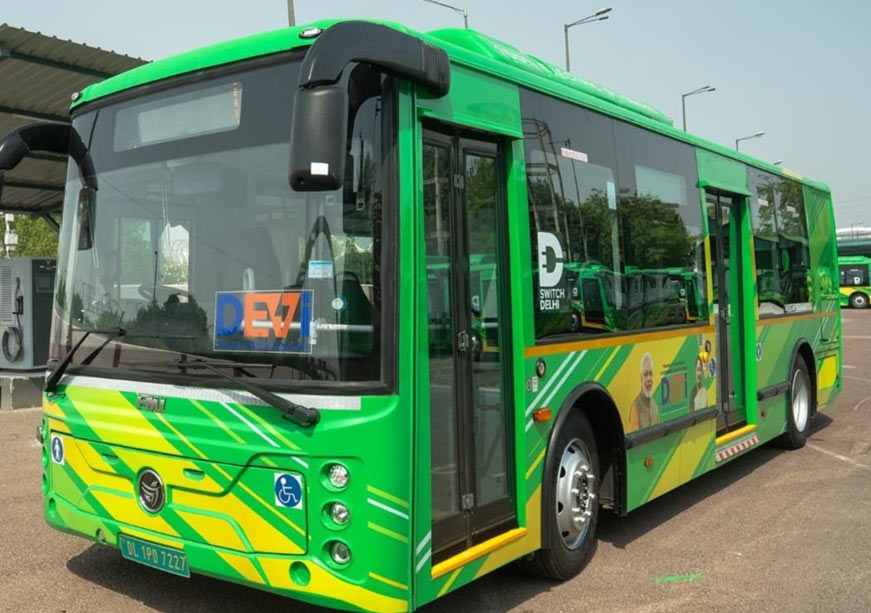
Electric bus (e-bus) deployment in India is progressing rapidly. Already, over 10,000 units are operational in more than 50 cities through the PM-eBus Sewa scheme, and an additional 20,000 buses are in the procurement stage. Moreover, the PM E-Drive scheme aims to add another 10,900 buses. This transition presents both challenges and opportunities for power distribution companies (DISCOMs).
Typically, an e-bus is a portable energy demand unit. For instance, a 12-meter urban e-bus has a battery capacity of 200-400 kWh, though this range may vary by bus model. These buses require high-power depot charging, typically 50-150 kW. They are generally charged overnight or during layovers, leading to high demand at depots. Around 100 buses can generate a charging demand of 4 to 5 MW, while larger depots can see demand rise to 60–70 MW. Such a sudden surge in loads overburdens older distribution systems, requiring upgrades and the adoption of smart charging solutions.
The National Smart Grid Mission has already warned that uncontrolled EV charging can strain the grid and cause reliability issues due to high loads, especially in cities. At the same time, India's public EV charging infrastructure has grown quickly, increasing from approximately 1,800 stations in February 2022 to more than 29,000 by mid-2025. Outstripping distribution-level readiness, this growth calls for addressing issues in grid planning, tariff design, and demand management.
India’s DISCOMs are presently financially vulnerable. They incur cumulative losses of US$84 billion as of March 2024. These losses are mainly due to the ongoing gaps between the Average Cost of Supply (ACS) and Average Revenue Realised (ARR), as well as problems in billing and collection. In this scenario, the high-load, predictable, and commercial demand from e-bus charging depots offers an opportunity to address their bottom lines.
Many DISCOMs still lack the metering and digital infrastructure needed for effective ToD implementation, underscoring the need for accelerated smart metering deployment to realise these benefits.
Unlike subsidised residential or agricultural consumers, e-bus charging is a commercial load with a stable, metered demand profile. It offers DISCOMs a consistent way to recover fixed costs through long-term supply agreements. However, high electricity tariffs increase e-Buses' operating costs and put pressure on the balance between the DISCOMs’ cost recovery and fleet viability. Moreover, the upfront cost of e-buses in India is 30-70 percent higher than that of diesel buses. The increase in power tariffs will reduce profits and challenge the Gross Cost Contract[1] model that underpins most deployments. For DISCOMs to benefit, e-bus operators must act as supportive partners through reasonable tariffs and planning, rather than becoming cost obstacles.
Additionally, the introduction of Time-of-Day (ToD) tariffs from April 2024 for consumers above 10 kW, extended to all non-agricultural users by April 2025, marks an important reform for e-bus grid integration. ToD acts as both a risk and an opportunity. Charging during peak evening hours increases costs, while shifting loads to off-peak night hours can lead to savings. Several states now have EV-specific tariffs that are typically 10-20 percent lower than standard commercial rates. When paired with smart load management, this can greatly lower operating costs for e-bus fleets. However, many DISCOMs still lack the metering and digital infrastructure needed for effective ToD implementation, underscoring the need for accelerated smart metering deployment to realise these benefits.
One of the most powerful solutions to address the issue is e-bus grid integration, which enables Vehicle-to-Grid (V2G) opportunities. A parked e-Bus is principally a non-used 200–400 kWh battery. During the hours when urban buses are at depots, mainly between midnight and 5 AM, they could serve as a huge distributed power storage resource. If embraced, V2G can help manage peak demand, offering promising solutions for grid stability and renewable integration, fostering optimism about technological progress.
A pilot demonstration by BSES Rajdhani Power Limited (BRPL) in Delhi proved that AC-based bidirectional (V2G) charging[2] can enable EVs to export power to the grid, highlighting their potential to support distribution utilities in managing load and enhancing grid flexibility. V2G also improves load profiles and helps capture irregular renewable energy. On these lines, the Central Electricity Authority (CEA) is developing strategies for reverse charging. If implemented on a larger scale, V2G could provide additional distributed storage capacity.
Coordination between bus procurement agencies, urban local bodies, and DISCOMs is irregular rather than institutionalised. Enhancing coordination in infrastructure placement and grid upgrades will reassure stakeholders that successful e-bus integration is achievable and sustainable.
An e-bus that charges during midday solar peaks and discharges from 6 to 9 PM during the evening rush acts as a grid service provider. Fleet operators may earn by selling back power, ultimately generating additional revenue, thereby changing the economics of e-Bus operations. Moreover, coordination between bus procurement agencies, urban local bodies, and DISCOMs is irregular rather than institutionalised. Enhancing coordination in infrastructure placement and grid upgrades will reassure stakeholders that successful e-bus integration is achievable and sustainable.
The path forward requires coordinated action across three areas.
With projected annual growth of 20 percent in India's e-Bus market through 2030, near-term decisions on tariff structures, grid infrastructure, and V2G technologies will determine how DISCOMs can realise this new opportunity.
The e-bus represents more than just a sustainable mode of transportation; it is also integral to the local energy ecosystem by transforming load profiles and influencing the performance of the distribution network. Due to the large volume and duration of electricity consumed by e-Buses, they can generate new revenue streams for distribution companies (DISCOMs), but they may also strain the grid if not managed properly. In India, there is already strong policy support, but to develop electrified fleets that enhance rather than overburden the grid, there is now an urgent need for greater regulatory clarity and improved cooperation among agencies and stakeholders. With projected annual growth of 20 percent in India's e-Bus market through 2030, near-term decisions on tariff structures, grid infrastructure, and V2G technologies will determine how DISCOMs can realise this new opportunity.
Nandan H Dawda is a Fellow with the Urban Studies programme at the Observer Research Foundation.
[1] Gross Cost Contract (GCC) is a public transport procurement model in which the operator is paid a fixed fee per kilometre, while the public authority retains fare revenues and bears demand risk.
[2] AC-based bidirectional charging enables electric vehicles to both draw power from and feed electricity back to the grid using alternating current. It typically relies on on-board inverters within the vehicle, reducing the need for specialized external charging infrastructure.
The views expressed above belong to the author(s). ORF research and analyses now available on Telegram! Click here to access our curated content — blogs, longforms and interviews.

Dr Nandan H Dawda is a Fellow with the Urban Studies programme at the Observer Research Foundation. He has a bachelor's degree in Civil Engineering and ...
Read More +


 PREV
PREV