This essay examines the structural weaknesses in Bangladesh's energy sector and argues that renewable energy expansion and regional energy cooperation are essential to building long-term energy security and resilience.
The disruption of the global gas supply chain through the Strait of Hormuz has emerged as a major threat to Bangladesh, an import-dependent country. Most of South Asia’s developing economies rely heavily on imported fossil fuels for power generation, transport, industry, and household consumption, with Bangladesh importing one-third of its total gas supply from Qatar and Oman as liquefied natural gas (LNG). It is anticipated that the Middle East crisis will drive up Bangladesh's fossil fuel import bill by USD 4.8 billion — a 40 percent increase from 2025 — as the country depends on fossil fuels for nearly 98 percent of its electricity generation. While the government has reduced gas supply by 150-200 mmcf compared to the previous month as a precautionary measure — against a daily demand of 4,000 mmcf (Million Cubic Feet), with current supply already below 2,700 mmcf — this has significantly hurt the Ready-Made Garment (RMG) sector, which accounts for 80 percent of Bangladesh's export earnings.
Bangladesh's inability to adequately cope with external shocks to global energy markets reflects structural vulnerabilities: a heavy dependence on fossil fuels, insufficient energy diversification, and an underdeveloped renewable energy infrastructure.
Bangladesh's energy insecurity has persisted since COVID-19, when the country saw a nearly 50 percent drop in electricity consumption during the first wave, and had to grapple with a dollar crisis that forced it to stop importing LNG from the spot market during the Russia-Ukraine conflict in 2022. Bangladesh's inability to adequately cope with external shocks to global energy markets reflects structural vulnerabilities: a heavy dependence on fossil fuels, insufficient energy diversification, and an underdeveloped renewable energy infrastructure. The central challenge, therefore, is not only to navigate the energy crisis stemming from the Middle East conflict, but to develop a resilient energy architecture capable of withstanding an increasingly volatile geopolitical environment. Against this backdrop, this essay analyses the structural vulnerabilities of Bangladesh's energy system revealed by recent external shocks, and argues for renewable energy expansion and regional energy cooperation as key pillars of long-term energy security.
Bangladesh regularly imports fossil fuels to meet baseload electricity demand, with natural gas, oil, and coal accounting for approximately 57.37 percent, 32.39 percent, and 2.76 percent, respectively, of total electricity generation. While indigenous natural gas is a principal source of energy supply — supporting industry, domestic use, and fertiliser production — it is at risk of exhaustion within the next decade if new reserves are not discovered. Average electricity demand in Bangladesh is growing at 10 percent annually, with the industrial sector accounting for the greatest share. However, nearly 50 percent of its enterprises cannot access consistent energy, resulting in low levels of production. Consequently, Bangladesh imports approximately 20.69 lakh tonnes of crude oil to meet its electricity requirements, of which nearly 63 percent comes from the United Arab Emirates, Iraq, and Saudi Arabia.
At the same time, Bangladesh's renewable energy infrastructure — primarily solar, hydro, wind, and biomass — remains underdeveloped. It is estimated that Bangladesh will require 57,000 MW of electricity generation to meet demand by 2040. Currently, however, renewable energy accounts for just 4.56 percent of total electricity generation, and the overall contribution of renewables to total electricity demand by 2040 is projected to reach only 10 percent — well short of the 40 percent target.
Dhaka, however, remains steadfast in positioning itself as a regional hub for renewable energy. The former Minister of Power, Energy, and Mineral Resources, Nasrul Hamid, stated that Bangladesh needed international investment of US$80-100 million to drive its transition towards renewable energy. China, through its Belt and Road Initiative (BRI) investments, has emerged as the biggest player in Bangladesh's clean energy projects. In 2020, Bangladesh's North-West Power Generation Company Limited and Chinese engineering contractor National Machinery Import and Export Corporation (CMC) formed a joint venture for renewable energy, with plans to build 450 MW of new solar capacity and a 50 MW wind farm. Following a public-private partnership model, the MoU stipulated that Bangladesh would provide land while the Chinese government would invest around US$500 million in the projects.
The newly elected BNP government has announced its aim to generate 10,000 MW of renewable energy-based power by 2030, as part of its 3F-3R (Fallen Fossil Fuel – Rising Resilient Renewables) framework — signalling a structural shift in Bangladesh's energy policy. It is estimated that meeting this target would require an investment of USD 9.36 billion across solar, wind, biomass, and biogas projects. Currently, Chinese investment accounts for 50 percent of total FDI in Bangladesh's renewable energy sector, underscoring Beijing’s dominant role in Dhaka's clean energy transformation.
Despite its potential, renewable energy investment remains constrained by land acquisition challenges, inadequate technology and knowledge-sharing frameworks, currency depreciation, and complex financing and due diligence processes. Power Purchase Agreements (PPAs) have previously served as a key determinant of investment flows through sovereign guarantees, well-structured arbitration, and balanced risk coverage. However, the interim government's decision to discontinue the Implementation Agreement — which offered sovereign backing for investor commitments — removed a critical layer of payment security precisely when renewable investment was beginning to scale.
Despite its potential, renewable energy investment remains constrained by land acquisition challenges, inadequate technology and knowledge-sharing frameworks, currency depreciation, and complex financing and due diligence processes.
Furthermore, sole dependency on China for renewable investment risks creating a monopolising effect on Bangladesh's power and energy sector. Chinese investments in Latin America's energy transition have been linked to the extraction of strategic resources such as lithium, and Beijing's push to dominate the clean energy technology supply chain economically insulates its energy pricing from global fluctuations — enabling a persistent tool of diplomatic, political, and economic leverage over purchasing states like Bangladesh. The clean energy transition must therefore also be guided by diversification strategies to avoid over-dependency on a single partner, particularly by harnessing neighbourhood ties.
India and Bangladesh have steadily expanded energy cooperation since establishing their first cross-border electricity grid in 2013 — 500 MW through the Bheramara-Bahrampur interconnection, and another 160 MW through the Tripura-Comilla interconnection. Bangladesh currently imports nearly 15 percent of its electricity from India through multiple interconnections. In 2022-23, Bangladesh signed three deals to purchase 2,656 MW of electricity from Indian power plants in Jharkhand, West Bengal, and Tripura. The two countries have also collaborated on shared generation projects, including the 1,320 MW Rampal power plant. Despite political uncertainties following the 2024 change of government in Bangladesh, energy cooperation has largely remained resilient, with continued imports of electricity and petroleum products from India.
Drawing on India's successful power trade arrangements with Nepal and Bhutan, Bangladesh can leverage India's cross-border electricity trade framework to develop trilateral renewable energy-sharing agreements and new transmission interconnections.
The growing commitment to low-carbon development presents a new opportunity to deepen bilateral energy ties. High costs associated with imported coal-based power have encouraged Bangladesh to explore renewable energy imports, including hydropower from Nepal and Bhutan transited through Indian territory. The BBIN (Bangladesh-Bhutan-India-Nepal) subregion possesses immense renewable energy potential, particularly in hydropower, solar, and wind. However, electricity trade remains largely bilateral. Drawing on India's successful power trade arrangements with Nepal and Bhutan, Bangladesh can leverage India's cross-border electricity trade framework to develop trilateral renewable energy-sharing agreements and new transmission interconnections. Bangladesh has, notably, already signed an agreement to import 1,000 MW of renewable energy from India.
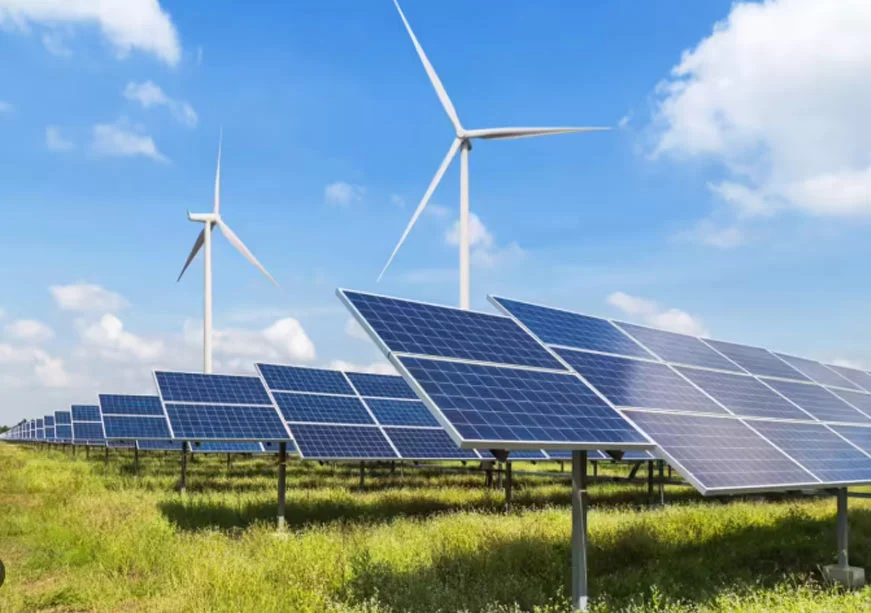
Solar energy cooperation offers another promising avenue. While India has emerged as a global leader in solar deployment, Bangladesh has pioneered one of the world's largest off-grid solar programmes. India surpassed 100 GW of installed solar capacity in 2025, a 3,450 percent increase over the past decade from 2.82 GW in 2014. Bangladesh, meanwhile, operates the largest off-grid solar programme in the world; its Solar Home Systems initiative has provided electricity to over four million rural households and enabled small rural businesses to operate more efficiently. Joint initiatives in solar manufacturing, technology standardisation, procurement, capacity building, and knowledge sharing could therefore strengthen renewable energy development in both countries. Such cooperation would also advance the objectives of the International Solar Alliance (ISA), including solar applications in agriculture, mini-grids, rooftop systems, energy storage, and green hydrogen. In the long run, enhanced India-Bangladesh renewable energy cooperation could serve as a foundation for broader regional energy connectivity within the BBIN subregion, improving energy security, grid resilience, and sustainable economic development.
In the long run, enhanced India-Bangladesh renewable energy cooperation could serve as a foundation for broader regional energy connectivity within the BBIN subregion, improving energy security, grid resilience, and sustainable economic development.
As Bangladesh grapples with import dependency and repeated price and supply shocks, short-term crisis management is no longer sufficient. A more resilient future can only be shaped by its ability to diversify its energy basket — particularly by expanding renewable energy capacity through neighbourhood engagement. India, as well as the broader BBIN subregion, are practical partners for developing cross-border solar grid connectivity, joint renewable infrastructure financing, and regional power transmission networks linking Nepal and Bhutan's hydropower to Bangladesh through Indian territory.
Diversified sourcing with a focus on renewable energy, supported by regional partnerships, can offer a long-term, practical buffer against geopolitically induced energy disruption. Enhancing investor confidence through clear guidelines for public land acquisition in renewable energy projects under the public-private partnership (PPP) model, waiving import duties on solar accessories, reducing tariffs on battery energy storage systems (BESS), and reworking the weaknesses of the current Power Purchase Agreement (PPA) structure are all integral to developing a regional ecosystem that fosters an effective energy transition.
Anasua Basu Ray Chaudhury is a Senior Fellow with the Neighbourhood Initiative at the Observer Research Foundation.
Shreya Das is an Intern at Observer Research Foundation.
The views expressed above belong to the author(s). ORF research and analyses now available on Telegram! Click here to access our curated content — blogs, longforms and interviews.

Anasua Basu Ray Chaudhury is Senior Fellow with ORF’s Neighbourhood Initiative. She is the Editor, ORF Bangla. She specialises in regional and sub-regional cooperation in ...
Read More +


 PREV
PREV