A city-centred century demands a new environmental compact: one that places nature, resilience, and sustainable urban governance at the heart of development
Image Source: Pexels
Discussions on sustainability have hitherto mainly focused on forests, wildlife, oceans, and international climate negotiations. However, it is increasingly becoming evident that the future of the global environment will be determined as much by cities as by natural ecosystems. The theme of World Environment Day 2026, “Inspired by Nature. For Climate. For Our Future,” thus comes at a time when environmental debates are undergoing a fundamental shift.
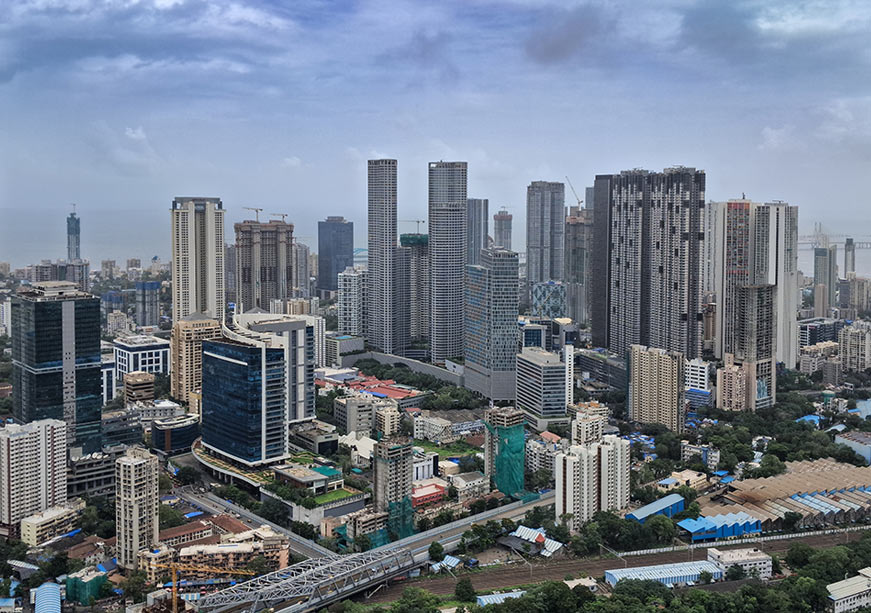
Cities occupy less than 3 percent of the Earth’s land surface, yet they account for over 80 percent of global GDP. They also consume roughly 75 percent of natural resources and emit 60-80 percent of greenhouse gas. Clearly, as urbanisation has expanded and driven economic development, urban governance and environmental sustainability have become inseparable.
The environmental challenges confronting humanity are increasingly manifesting in urban areas. Although climate change, biodiversity loss, pollution, resource depletion, and water stress are global phenomena, their impacts are increasingly concentrated in cities. The United Nations projects that 68 percent of the global population will reside in urban areas by 2050. This trend will lead to rising consumption, expanding infrastructure needs, and increased pressure on natural systems.
Recent extreme weather events illustrate this trend. Urban flooding in Dubai and several Indian cities, prolonged droughts in Cape Town and Chennai, extreme heat across Europe and South Asia, and the social dimensions of recurring climate-induced disruptions in Jakarta and Delhi demonstrate that environmental risks are increasingly urban risks.
Besides being the result of rapid urban growth, the challenges are also the consequence of governance choices. Wetlands are reclaimed for construction, floodplains are encroached upon, waterways are channelised, and coastal ecosystems are degraded to accommodate the growing urban sprawl. The environmental future of cities will thus depend on whether urban governance systems can balance economic growth with ecological resilience.
The environmental trajectory of India’s cities will substantially shape its development story. Urban areas currently contribute ~60 percent of India’s GDP and are expected to account for an even larger share of economic output as the country advances towards its aspiration of becoming a developed economy by 2047. Simultaneously, India’s urban population is expected to exceed 800 million within the coming decades. While the scale of this transformation is unprecedented, it will also mean that cities will confront even more severe environmental stress.
Low-income communities, informal settlements, migrant workers, and those dependent on climate-sensitive livelihoods often bear the greatest burden of environmental degradation while possessing the fewest resources to adapt. Environmental sustainability is thus also a question of social equity and urban justice.
Air pollution remains among the most visible examples. Several Indian cities continue to rank among the world's most polluted urban centres, imposing significant public health and economic costs. According to the World Air Quality Report 2025, India remains among the countries with the poorest air quality.
Water security presents another challenge. Chennai’s 2019 water crisis exposed how urban growth outpaced ecological and institutional capacities. At the same time, the city’s recurring floods highlight the paradox of simultaneous water scarcity and water excess.
Similarly, Bengaluru’s recurrent flooding has highlighted the consequences of eroding lakes, wetlands, and natural drainage channels due to urban expansion. Likewise, Mumbai’s flooding episodes, which occur with predictable certainty every monsoon, underscore the importance of preserving mangroves, wetlands, and natural drainage systems in rapidly expanding coastal cities.
Worryingly, the environmental costs of urbanisation are unevenly distributed. Low-income communities, informal settlements, migrant workers, and those dependent on climate-sensitive livelihoods often bear the greatest burden of environmental degradation while possessing the fewest resources to adapt. Environmental sustainability is thus also a question of social equity and urban justice.
These challenges are as much institutional as they are environmental. The urban local bodies (ULBs), responsible for many aspects of environmental management, often lack the financial resources, technical expertise, and administrative authority required to address increasingly complex environmental risks.
If cities are to become more resilient, they must begin working with nature rather than against it. Traditionally, urban development frequently replaced natural systems with engineered concrete and steel infrastructure. Rivers were channelised, wetlands reclaimed, forests cleared, and coastlines compressed. Climate change is now exposing the limitations of this approach.
Cities are recognising that natural systems perform critical environmental functions. Wetlands absorb floodwaters, mangroves reduce storm surge impacts and coastal erosion, urban forests moderate temperatures and improve air quality, lakes recharge groundwater and enhance water security, and green corridors support biodiversity while improving urban liveability. Interventions in these nature-based solutions must, therefore, be viewed as investments in resilience.
The next phase of urban development must place ecological systems at the centre rather than the periphery of planning processes.
The growing recognition of the value of natural ecosystems has given rise to investments in nature-based solutions. For example, the Netherlands has restored floodplains through its “Room for the River” programme. China has invested extensively in “Sponge City” initiatives that integrate ecological infrastructure into urban planning. Singapore has transformed water management through integrated approaches combining engineering and ecological restoration.
India is also beginning to recognise the value of ecological infrastructure. Cities have responded with wetland restoration projects, urban forestry initiatives, river rejuvenation programmes, and climate action plans. However, these efforts remain fragmented and often pale in comparison to conventional infrastructure investments. The next phase of urban development must place ecological systems at the centre rather than the periphery of planning processes.
The most significant environmental transformation underway is the growing role of cities as environmental actors. In several countries, municipal governments are setting climate targets, developing resilience strategies, investing in green mobility, restoring ecosystems, and experimenting with innovative approaches to sustainability. Local decisions on land use, transportation, housing, water management, waste systems, and public spaces determine environmental outcomes in these cities. Networks such as C40 Cities and the Global Covenant of Mayors have demonstrated how cities are increasingly collaborating across national borders to address shared environmental challenges. For India, this carries an important lesson. Strengthening urban environmental governance requires strengthening urban governance itself.
As climate risks intensify, urban local bodies will increasingly be at the forefront of environmental management. The success of national sustainability objectives will depend on their ability to respond to environmental challenges.
Cities require dedicated finances, skilled staff, reliable environmental data, integrated planning frameworks, and greater institutional capacity. Environmental sustainability cannot be achieved solely through national programmes if local governments lack the resources and authority necessary to implement them effectively. As climate risks intensify, urban local bodies will increasingly be at the forefront of environmental management. The success of national sustainability objectives will depend on their ability to respond to environmental challenges.
Nature-based solutions, climate adaptation infrastructure, sustainable mobility systems, ecosystem restoration, and resilient public services all require long-term financing. Yet municipal finance remains one of the weakest links in urban governance. India’s cities continue to depend heavily on state and central government transfers, while local revenue mobilisation remains constrained. Although initiatives such as municipal bonds, climate finance mechanisms, and emerging discussions on green urban investments offer promise, they remain insufficient to meet the scale of future needs.
As climate risks intensify, cities will require access to dedicated systems of adaptation and resilience finance. The challenge is not about mobilising more resources but ensuring the environmental investments are integrated into mainstream urban planning and budgeting processes.
World Environment Day 2026’s theme calls for reflecting on our relationship with nature, which is primarily mediated through cities. Urban land use, housing, mobility, waste management, energy consumption, water systems, and ecological conservation will shape the environmental future in the Anthropocene age. It will depend on whether cities continue to expand at the expense of natural systems or whether they learn to incorporate nature into the fabric of urban development.
For India, this challenge also presents an opportunity. Unlike many developed nations that are attempting to build resilience into already mature urban systems, India still has the opportunity to integrate sustainability into the next generation of urban growth. Nature offers valuable lessons in resilience, adaptation, and regeneration. If cities succeed in becoming more sustainable, resilient, and ecologically sensitive, they may become the greatest environmental solution.
Dhaval Desai is a Senior Fellow and Vice President at the Observer Research Foundation.
The views expressed above belong to the author(s). ORF research and analyses now available on Telegram! Click here to access our curated content — blogs, longforms and interviews.

Dhaval is a Vice President - Platforms and Communities at Observer Research Foundation, Mumbai. His spectrum of work covers diverse topics ranging from urban renewal ...
Read More +


 PREV
PREV