India has expanded the AIIMS network across underserved regions, but its next phase must focus on attracting and retaining the faculty who make tertiary care work

Image Source: Getty Images
The All India Institute of Medical Sciences (AIIMS) began with a different vision of public health from the one now attached to many hospital expansion projects. Its roots can be traced to the Health Survey and Development Committee, better known as the Bhore Committee, which submitted its report in 1946. The committee recommended a major central institute for postgraduate medical education and research, and AIIMS New Delhi was later established through the AIIMS Act of 1956. The early AIIMS project was also a talent project. Its first director, B. B. Dikshit, reached out to Indian physicians and medical scientists working or training abroad and persuaded some of them to return to India. The aim was to begin with research capacity and specialist depth, rather than wait for a government hospital to slowly acquire them.
For decades, the AIIMS model remained centred around Delhi. The first major attempt to scale it through the Pradhan Mantri Swasthya Suraksha Yojana (PMSSY) was announced in 2003 and formally launched in 2006 to address regional imbalances in tertiary healthcare and medical education. The first wave created AIIMS-like institutions in Bhopal, Bhubaneswar, Jodhpur, Patna, Raipur, and Rishikesh. AIIMS Raebareli was established during the United Progressive Alliance (UPA) period. The next major change came after 2014, with new AIIMS announced or approved across multiple states. The scale of expansion is now considerable, and 22 new AIIMS have been approved, with 18 currently functional, offering outpatient, inpatient, and teaching-learning facilities.
Official data from 20 AIIMS institutions show large staffing gaps across the network. Across these institutes, around 2,316 faculty and 15,525 non-faculty posts were vacant. Roughly one in three (~36 percent) sanctioned faculty posts were vacant, while non-faculty shortages ran into the tens of thousands (~26 percent). Table 1 summarises institute-wise sanctioned, filled, and vacant faculty and non-faculty positions across the AIIMS network. The vacancy figures capture only the visible part of the problem. Faculty shortages in the new AIIMS institutions point to a deeper challenge of recruitment and retention, especially in places where the wider clinical and professional ecosystem is still taking shape.
Table 1: Faculty and Non-Faculty Vacancies across AIIMS Institutions, March 2026

Source: Lok Sabha Starred Question No. 486*
Some technology-led support is also emerging. AIIMS Delhi and IIT Delhi have signed an MoU to establish a Centre of Excellence for AI in Healthcare, with a stated focus on AI-based solutions for national health programmes, upskilling providers and improving access to quality healthcare in remote and marginalised areas. In February 2026, the Union Health Minister Jagat Prakash Nadda framed AI-enabled diagnostics and faster faculty recruitment as linked priorities for the expanding AIIMS network, suggesting that technology should support staffing reform rather than distract from it. He also suggested at least four interview cycles annually, with regular structured recruitment mechanisms. Such tools may prove useful in easing parts of the service-delivery burden, but they cannot substitute for the faculty depth needed to build tertiary departments.
The government’s explanation acknowledges that recruitment is shaped by more than sanctioning posts. Filling vacant positions depends on the availability of suitable and eligible doctors or health professionals, the reservation roster, and the institute’s location. There exist measures such as Standing Selection Committees (SSCs), contract engagement of retired faculty up to 70 years of age, visiting faculty schemes, NORCET (Nursing Officer Recruitment Common Eligibility Test) for nursing officers, CRE (Common Recruitment Examination) for Group B and C posts, and INI-CET and INI-SS for residents (Institute of National Importance Combined Entrance Test for Selection of Junior and Senior Residents). These are useful instruments, but they are largely mechanisms for recruitment throughput. They do not, by themselves, explain why a senior specialist or nursing leader would choose to build a career in a new institution rather than move to an established metropolitan city or enter private practice.
The committee therefore recommended reconsidering pay barriers and improving facilities for super-specialists if the government wants to run high-quality tertiary and super-speciality centres across the country.
The Parliamentary Standing Committee’s report (March 2026) on AIIMS New Delhi recorded high attrition among doctors and allied personnel due to low salaries and inadequate facilities compared with renowned hospitals. It noted that super-specialists such as cardiologists often leave higher public institutions for the private sector and cited an illustrative pay gap between roughly INR 1 lakh in government service and INR 4 to 5 lakhs in the private sector for a new cardiologist. The committee therefore recommended reconsidering pay barriers and improving facilities for super-specialists if the government wants to run high-quality tertiary and super-speciality centres across the country.
Evidence from the wider government medical education system can help explain why sanctioned posts may remain vacant even when recruitment mechanisms exist. A NITI Aayog-funded research study from 2023 on government medical colleges (GMCs) made a comparable point for the wider public medical education system. It found that many specialists face a difficult choice, with government salaries and allowances often unable to match the financial pull of private practice, especially in surgical specialities.
Location also compounds the compensation gap. A newer AIIMS in a non-metro setting is asking faculty to relocate not only themselves but also, often, spouses, children and ageing parents. Housing, education, employment opportunities for spouses, air and rail connectivity, professional networks, research collaborators, and access to private practice ecosystems all influence the decision. The World Health Organisation’s recommendations on retaining health workers in remote and rural areas emphasise this wider bundle. They call for improved living conditions for health workers and their families, including sanitation, electricity, telecommunications and schools, along with safe working environments, equipment, supervision, professional networks, and career development pathways.
The recruitment pipeline also has its own friction. The NITI Aayog-funded research study mentioned earlier, while not an AIIMS-specific assessment, found that more than 70 percent of faculty respondents reported no fixed annual hiring cycle and that the average time from advertisement to final offer was about 203 days for regular faculty, compared with 94 days for contractual posts. It also found that delays after selection can cause potential faculty to move to private employment or practice before the public institution completes onboarding. The report identified sanction-to-advertisement delays as another bottleneck, with delays extending to two years in Delhi and Uttar Pradesh and nearly four years in Haryana and Chhattisgarh. These findings cannot be mechanically applied to AIIMS, which has a different governance structure and INI status. They do, however, point to a wider public-sector problem that new AIIMS institutions are unlikely to escape fully. In a thin specialist labour market, long recruitment timelines can weaken the ability of newer institutions to secure strong early faculty cohorts. In some specialities, the candidate pool is small to begin with. Specialities face demand from public hospitals, private chains, medical colleges and diagnostic networks at the same time. A delayed public recruitment cycle is therefore competing against faster private hiring and more flexible contractual offers.
Specialities face demand from public hospitals, private chains, medical colleges and diagnostic networks at the same time. A delayed public recruitment cycle is therefore competing against faster private hiring and more flexible contractual offers.
The pool is also uneven across specialities and seniority levels. AIIMS-specific parliamentary data shows large faculty gaps across several newer institutes, but the speciality-wise reasons behind those vacancies require more granular public reporting. Evidence from GMCs offers a useful, though not identical, comparator. The research discussed earlier suggests that shortages are more pronounced in clinical sciences and super-specialities than in pre-clinical and para-clinical subjects. It also pointed out that eligibility criteria around senior residency, publications and other academic requirements may exclude some experienced clinicians who could otherwise contribute to teaching. The standing committee report, although focused on the flagship institute, shows how such gaps affect institutional functions. It is observed that Assistant Professor vacancies affect student-teacher ratios, academic mentorship and research productivity, while long-pending Professor vacancies can weaken leadership in key departments.
Retention failures are the warning sign that recruitment alone will not solve the problem. The standing committee recorded 1,306 sanctioned faculty posts, of which 854 were in position, including 73 assistant professors on contract, leaving 452 faculty vacancies, or about 35 percent. The shortage was not confined to faculty. The institute also had more than 700 junior and senior resident vacancies and 2,540 non-faculty vacancies, even as 328 regular faculty posts had been advertised. The recruitment pipeline was producing some appointments, but not enough to close the gap. In the 2021–22 faculty recruitment cycle, 2,325 candidates applied, 203 were selected, and 176 joined. No faculty member joined in 2024–25 or 2025–26 up to the date reported, while 32 faculty members resigned, took voluntary retirement, or superannuated during the same period. AIIMS New Delhi has been carrying a faculty deficit while exits have continued and new appointments have stalled. This is why the committee recommended time-bound recruitment, a fast-track target of filling at least 85 percent of sanctioned posts, phasing down reliance on contractual faculty, and retention incentives tied to hard-to-fill specialities and underserved postings.
RTI-based reporting has also pointed to posts lying unfilled for 5 to 10 years in some AIIMS, with senior-level vacancies across multiple clinical and diagnostic specialities at AIIMS New Delhi. Contractual appointments may help departments function in the short term. AIIMS staffing litigation has also treated contractual hiring as a transitional device, used when new institutes required staff before regular recruitment systems and permanent appointments were in place. Contract appointments may move faster, with wider GMC evidence suggesting shorter timelines than regular recruitment; however, they cannot become the default route for institutions expected to build departments and sustain research.
India needs an AIIMS-specific assessment of recruitment, onboarding, and retention, covering vacancy-to-joining timelines, speciality-wise bottlenecks, non-joining, resignations, location effects, compensation, family relocation, and the limits of contractual staffing.
A first step is to define the problem more precisely. Vacancy tables show the scale of the staffing gap, but not the institutional reasons behind it. India needs an AIIMS-specific assessment of recruitment, onboarding, and retention, covering vacancy-to-joining timelines, speciality-wise bottlenecks, non-joining, resignations, location effects, compensation, family relocation, and the limits of contractual staffing. The findings should inform a shift from vacancy management to talent management.
Hard-to-fill specialities need differentiated packages that include research start-up grants, protected academic time, conference support, housing priority, childcare and school tie-ups, and faster administrative support for laboratories and clinical equipment. For newer AIIMS institutions, sanctioned posts must translate into departments capable of training and retaining talent over time. Faculty recruitment, therefore, has to be treated as institution-building. The expansion of AIIMS has widened the geography of advanced public care. With sustained attention to faculty careers and institutional ecosystems, it can also deepen the quality of that care.
K. S. Uplabdh Gopal is an Associate Fellow with the Health Initiative at the Observer Research Foundation.
The views expressed above belong to the author(s). ORF research and analyses now available on Telegram! Click here to access our curated content — blogs, longforms and interviews.
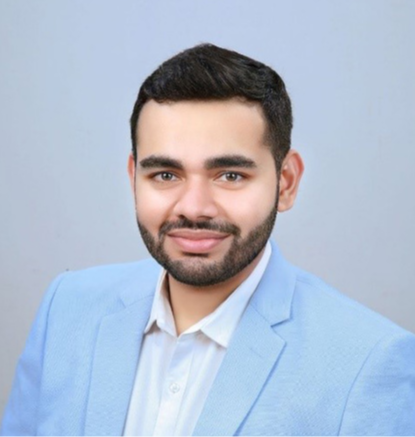
Dr. K. S. Uplabdh Gopal is an Associate Fellow with the Health Initiative at the Observer Research Foundation. He writes and researches on how India’s ...
Read More +


 PREV
PREV

