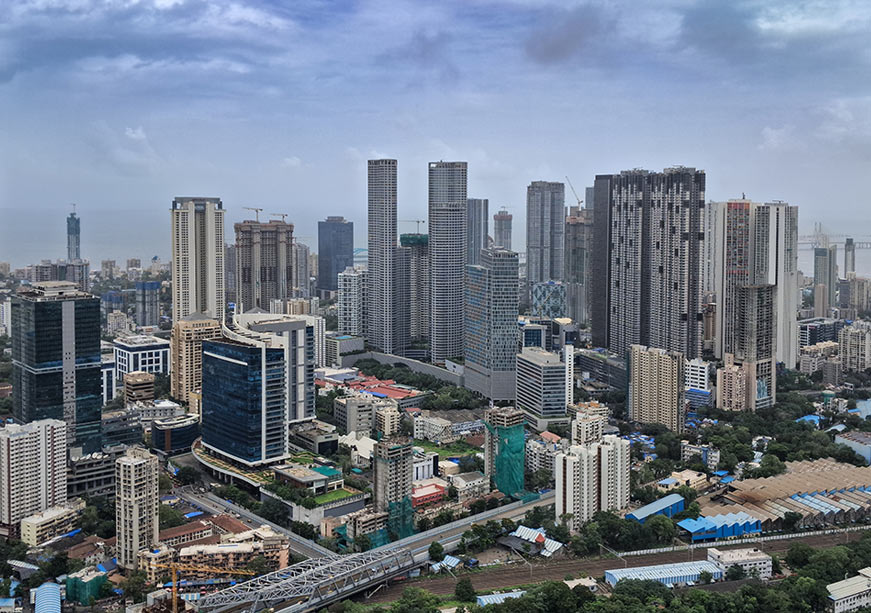
As Indian cities increasingly rely on data-driven governance, fragmented and exclusionary measurement systems are distorting how urban resilience, vulnerability, and public need are understood - and who gets counted in the process

Most urban assessment frameworks that have proliferated in recent years are built on the common assumption that cities generate reliable, standardised, and comparable data. For example, the Economist Intelligence Unit’s Global Liveability Index ranks 173 cities across 30 indicators spanning stability, healthcare, culture and environment, education, and infrastructure. Similar approaches also underpin the UN-Habitat City Resilience Profiling Tool and India’s ClimateSmart Cities Assessment Framework (CSCAF), the latter examining 28 indicators across energy efficiency, green cover, mobility, water management, and waste systems. These frameworks increasingly shape policy priorities, funding decisions, and governance benchmarks through data-driven urban measurement.
However, in India, data accuracy, comprehensiveness, and disaggregation to build such indices or frameworks are often missing. Consequently, cities are increasingly governed through composite indicators built on datasets that are uneven, incompatible, outdated, or inconsistent. Critical dimensions, such as informal-sector capacity and citizen perceptions of public services, are either missing from official records, collected in incompatible formats, or updated too infrequently for effective tracking.
More than just technical inconveniences, such constraints skew decisions about which aspects of urban resilience are measured and receive policy attention, which vulnerabilities are addressed, and whose experiences of the city are assessed.
Urban resilience assessment confronts data constraints operating across three distinct dimensions: availability, periodicity, and format compatibility.
Availability Gaps: Most exclusions within urban datasets are structural blind spots. The National Crime Records Bureau publishes crime data for 53 metropolitan cities, but communal riots are reported with inconsistent city-level disaggregation. Citizen perceptions of safety, service quality, institutional trust, civic participation, and community cohesion, which determine how residents actually experience cities, are measured sporadically through one-off surveys rather than through regular measurement cycles. This approach creates systematic bias in composite indices, which inevitably overweights dimensions such as climate and infrastructure, which have robust data, while underweighting harder-to-measure aspects such as trust and participation that often determine whether residents actually use available services during crises.
Healthcare data also presents distinct challenges. Mental health infrastructure receives virtually no attention in major health surveys. The National Family Health Survey-6 (2023-24) dropped several biomarker indicators but added no mental health module, leaving the National Mental Health Survey-2 as the only instrument tracking this dimension.
Data gaps are not randomly distributed. They systematically exclude specific populations and systems central to urban resilience in India. India’s urban indices are structurally incapable of capturing the informal systems that sustain routine life.
Informal healthcare access presents a different challenge. NFHS-6 records sources of health care but broadly classifies informal providers under categories such as ‘private clinics,’ overlooking their contribution to healthcare in low-income neighbourhoods. The National Sample Survey’s (NSS) 75th Round demonstrates that explicit tracking of informal health providers is methodologically feasible, yet such measurement remains episodic rather than embedded in India’s primary health datasets. Consequently, the primary care pathways that most urban poor rely upon remain statistically invisible.
Periodicity Mismatch: Even where data exists, update frequencies rarely align. The Census operates on ten-year cycles, with the 2021 enumeration now scheduled for 2027. The NFHS’s approximately three-year cycles are not in sync with the Periodic Labour Force Survey (PLFS), which, since January 2025, has provided monthly employment estimates. Climate monitoring through the India Meteorological Department (IMD) offers daily updates, while Environmental Status Reports, mandated for municipal corporations in states such as Maharashtra, are often published inconsistently or not at all. Constructing composite indices from data with incompatible time horizons raises fundamental methodological questions. The Public Distribution System still relies on 2011 Census data to determine beneficiary counts, despite substantial growth in urban populations over the past 15 years.
Format Incompatibility: Standardisation is another hurdle. Urban Local Bodies (ULBs) in India continue to use incompatible reporting and accounting systems, undermining the credibility of comparative assessment frameworks. A 2023 NITI Aayog study found that more than half of ULBs continue to follow cash-based accounting systems, with the transition to Double Entry Accrual-Based Accounting remaining incomplete. While states such as Karnataka have effectively standardised and digitised their ULBs under a unified, state-wide Fund-Based Accounting System built on the National Municipal Accounts Manual, others, including Maharashtra, continue to rely on a patchwork of decentralised, city-specific legacy applications that prevent seamless data aggregation.
Data gaps are not randomly distributed. They systematically exclude specific populations and systems central to urban resilience in India. India’s urban indices are structurally incapable of capturing the informal systems that sustain routine life. Housing presents a stark example. When looking at slum settlements, indicators used in most studies only count legally recognised settlements. Under the Slum Areas Act 1956 and subsequent state legislations, only notified slums receive municipal services and appear in official counts. ‘Identified slums’ meeting Census criteria, typically 60-70 households with inadequate services, receive no recognition because they fail state-specified thresholds. Odisha, for example, requires 20 households for legal notification. Informal housing improvements in these unnotified settlements remain statistically invisible.
Data constraints directly shape resource allocation and programme design. Climate adaptation funding flows toward cities with documented vulnerability assessments, which require baseline climate data, infrastructure inventories, institutional capacity assessments, and demographic profiles. The Smart Cities Mission selected cities partly based on their ability to provide data-driven proposals. The first-round cities of Pune, Jaipur, Surat, and Ahmedabad had existing digital governance systems, operational grievance portals, and published budget data. Several cities in Bihar, Jharkhand, and Uttar Pradesh entered later rounds despite facing greater infrastructure needs than many first-round cities. This staging bias favoured cities with measurement infrastructure over those with the greatest need. The Comptroller and Auditor General (CAG) found that 29 of the 44 projects approved in Patna had not started by October 2022, while earlier-selected cities had completed most planned initiatives by the mission’s conclusion in March 2025.
Social protection programmes designed to support urban informal workers during crises demonstrate how measurement failures translate to exclusion. The Pradhan Mantri Garib Kalyan Anna Yojana expanded food grain distribution during COVID-19 using ration card databases capped at 2011 Census population figures. While this scheme should have covered at least 922 million people by 2020 to maintain the same coverage percentage, only 800 million were included in the 2011 baseline, leaving over 100 million people excluded. Recognising that existing measurement systems created barriers during the crisis, the Supreme Court ordered states to provide dry rations without insisting on identity cards. Delhi launched a separate E-coupon scheme for workers without ration cards, but the scheme lapsed during the second wave, leaving many without access to food relief.
These data constraints reflect deeper institutional and political choices rather than purely technical limitations. Comprehensive urban indices, therefore, must not only deploy new measurement systems but fundamentally rethink what cities choose to measure and whose urban experience is documented.
These distortions create self-reinforcing cycles of exclusion. Despite informal waste management systems processing 60-70 percent of urban recyclables, official datasets track only formal collection networks. The 2016 Solid Waste Management Rules mandate waste picker integration, yet most cities have not fully implemented this provision because official data systems do not track informal waste flows, making their contribution invisible to budget allocation and policy design. Consequently, informal waste pickers operate without regulation, occupational safety protections, or inclusion in climate resilience planning, despite providing essential services during both normal operations and crises.
Integrating informal systems into official measurement frameworks is not merely a question of statistical accuracy. These data constraints reflect deeper institutional and political choices rather than purely technical limitations. Comprehensive urban indices, therefore, must not only deploy new measurement systems but fundamentally rethink what cities choose to measure and whose urban experience is documented.
Standardising data-collection formats across ULBs would enable cross-city comparisons without conflating measurement differences with actual performance variation. The Ministry of Housing and Urban Affairs must mandate minimum data disclosure requirements, covering informal-sector activity, mental health infrastructure, climate-hazard exposure mapping, and service-quality perception surveys, as conditions for accessing central urban development funding. Without these baselines, frameworks like CSCAF cannot be reliably populated, and the indices they generate will continue to reflect measurement capacity rather than actual urban conditions. The Periodic Labour Force Survey’s shift to monthly employment data demonstrates that measurement frequency can be accelerated when political will exists. Similar reforms could apply to health infrastructure tracking and municipal service delivery monitoring.
The stakes extend beyond index construction. When indices fail to capture the extent of informality, informal settlements, and uneven access to services, these exclusions become embedded within urban policy. The central challenge for Indian urban governance is therefore not simply collecting more data, but deciding whose realities become statistically visible and politically actionable.
Aditi Dixit is a Research Intern with the Urban Studies Programme at the Observer Research Foundation.
The views expressed above belong to the author(s). ORF research and analyses now available on Telegram! Click here to access our curated content — blogs, longforms and interviews.



 PREV
PREV