 PDF Download
In 2023, electricity generation in the United States (US), which accounted for 15 percent of global electricity generation, declined by 1 percent. In the decade ending in 2023, electricity generation declined by 0.4 percent.[i] In Europe, which accounted for 12.7 percent of global electricity demand in 2023, electricity generation declined by 2.4 percent, and in the decade ending in 2023, electricity generation declined by 0.6 percent.[ii] Electricity generation also declined in Japan, Taiwan, and South Korea, the industrialised high-income countries of the Asia Pacific.[iii] Overall, electricity generation declined by 1.5 percent in OECD (Organisation for Economic Co-operation and Development) countries in 2023, while electricity generation increased by 5.1 percent in non-OECD countries.[iv]
The era of stagnant growth in electricity demand in OECD countries (or the Global North) is forecast to end with the emergence of new large electricity loads arising from the promotion of domestic manufacturing, growth in electric vehicle (EV) adoption, revival of the cryptocurrency industry, and the increase in data centres (DCs) that power the generation and use of artificial intelligence (AI).[v] Among additional demand drivers, electricity demand from DCs is the fastest growing. This alone is likely to increase irrespective of policies and mandates for the energy transition, as DC electricity consumption is driven primarily by commercial and popular demand for data and AI services. As electricity demand from AI-based outcomes increases exponentially with the complexity of the task, the demand growth for electricity from DCs is likely to be unprecedented. [vi]
According to the International Energy Agency (IEA), rising DC electricity use, linked in part to the growth of AI, is likely to have primarily local impacts.[vii] This may be true in the short term, but in the longer term, when the share of energy consumed by DCs increases, it is likely to hike the price of traded primary energy forms such as natural gas and coal. Additionally, it will increase GHG emissions from energy production and use across the world. The economic benefits (efficiency and productivity gains) and environmental costs of energy use by DCs are likely to be unevenly distributed between the Global North and the Global South.
If DCs remain concentrated in the Global North as they are today, energy demand from the Global North will increase, compromising energy security and affordability for the Global South. Additional energy demand from the Global North may also enable appropriation of the shrinking atmospheric space for GHG emissions, crowding out development-related atmospheric space for GHG emissions that the Global South needs. An increase in carbon emissions from the Global North may also heighten the pressure on the Global South to accelerate reduction of emissions to accommodate additional emissions from the Global North. However, AI that depends on DCs could also accelerate breakthroughs in low emission energy innovation, manage the electricity grid to facilitate more renewables, and enhance the profitability and speed of electrification programmes in the Global South. Given the impact of AI, enabling conditions and scalability are not well-known, the expected benefits on the scale projected may not materialise. If so, the expected rise of DC GHG emissions will represent a social cost. The development goals of the Global South will be compromised if the Global South is expected to bear a disproportionate share of the social cost. The economic benefits of DCs, particularly higher economic growth and job creation, may accrue largely to the Global North.
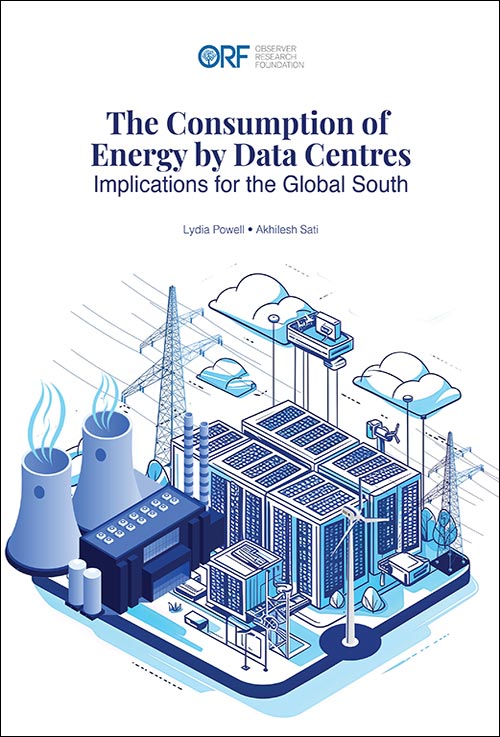
This report seeks to understand how the projected growth of energy consumption by DCs and the consequent increase in GHG emissions will be distributed between the Global North and the Global South. It will answer the following questions: (1) Will geography determine the location of DCs? If so, will countries in the northern hemisphere that host most of the technology companies have an advantage? Will cooler climates and low energy prices attract most of the DC investment? What will this mean for the Global South? (2) Will data sovereignty decide the location of DCs? Will this force DCs to be located in countries that are otherwise not favourable? (3) Will companies, rather than countries, decide the location of DCs? If commerce drives decisions on DC location, will it create opportunities for the Global South as low-cost locations, thus redistributing some of the economic benefits?
Read the report here.
[i] Energy Institute, Statistical Review of World Energy 2024, https://www.energyinst.org/statistical-review
[ii] “Statistical Review of World Energy 2024”.
[iii] “Statistical Review of World Energy 2024”.
[iv] “Statistical Review of World Energy 2024”.
[v] IEA, Energy and AI, Paris, International Energy Agency, 2025, https://www.iea.org/reports/energy-and-ai/
[vi] IEA, “Electricity 2024: Analysis and Forecast to 2026,” Paris, International Energy Agency, 2024.
[vii] “Energy and AI”
The views expressed above belong to the author(s). ORF research and analyses now available on Telegram! Click here to access our curated content — blogs, longforms and interviews.

Ms Powell has been with the ORF Centre for Resources Management for over eight years working on policy issues in Energy and Climate Change. Her ...
Read More +
Akhilesh Sati is a Programme Manager working under ORFs Energy Initiative for more than fifteen years. With Statistics as academic background his core area of ...
Read More +


 PREV
PREV


