Blue economy’ is the integration of ocean economy development with values of social inclusion and environmental sustainability, along with dynamic and innovative business models. For India, however, blue economy extends beyond being merely an economic and environmental proposition. It presents India with an unprecedented opportunity ...
With growing water scarcity across many parts of the world, competition over access to this vital resource has been known to spark conflict. Following the September 2016 Uri attack in India, the government made plans to retaliate against its neighbour by exercising its right to ...
As India places the Mekong sub-region among its priorities under the country’s ‘Act East’ policy, the ongoing India-Myanmar-Thailand Trilateral Highway project––currently the only land connectivity project between India and the Mekong countries and the wider Southeast Asian region––could prove to be a game changer. It ...
It will not be an exaggeration to say that almost all the countries in Africa face some form of conflict. Yet, most of them have managed to survive, and some—like South Sudan and the Democratic Republic of Congo—have even evolved into reasonably successful states. However, ...
Trade relations between Europe and India require new eclectic and dynamic ways of thinking. This brief examines hurdles in mainstream policy thinking that block the way for imagining and doing trade differently. ...
This paper trains the spotlight on India’s relations with Africa by studying the country’s relations with two east African countries – Tanzania and Kenya, and two south African countries – Mozambique and South Africa. The paper opens with a description of the trade, investment, and ...
Climate change has added to the enormity of India’s food security challenges. While the relationship between climate change and food security is complex, most studies focus on one dimension of food security, i.e., food availability. This paper provides an overview of the impact of climate ...
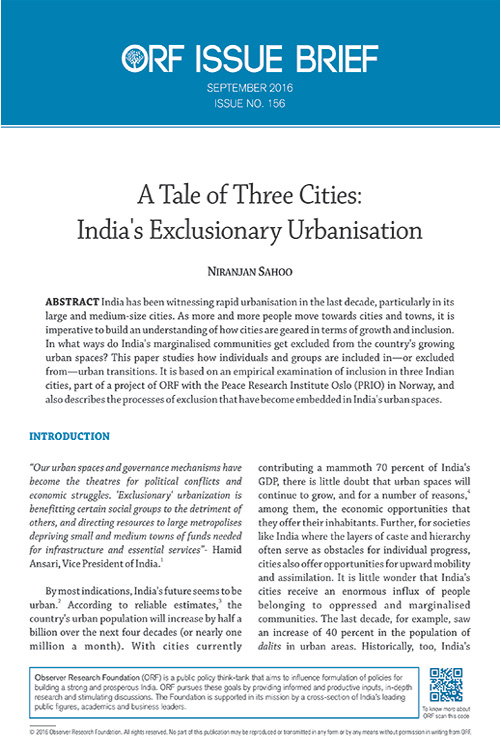
India has been witnessing rapid urbanisation in the last decade, particularly in its large and medium-size cities. As more and more people move towards cities and towns, it is imperative to build an understanding of how cities are geared in terms of growth and inclusion. ...
The creation of a competent national indicator framework will be central to the tracking — and eventual attainment — of India’s sustainable development goals. Through an analytical study of India’s past efforts relating to the MDGs and its initial preparations for the SDGs, this paper identifies specific hurdles ...
India introduced its e-tourist visa (eTV) policy in November 2014. Despite initially impressive results in terms of increased arrivals, there is no indication that such modest success will create a significant impact on tourism, or prove to be sustainable in the long run. This paper finds that ...

Dr. Amrita Narlikar’s research expertise lies in the areas of international negotiation, World Trade Organization, multilateralism, and India’s foreign policy & strategic thought. Amrita is Distinguished Fellow at the Observer Research Foundation. She is also Honorary Fellow of Darwin College, University ...
Read More +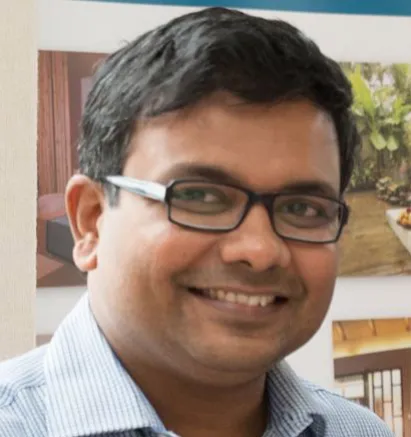
Dr. Sanjay M Pattanshetty is Head of theDepartment of Global Health Governance Prasanna School of Public Health Manipal Academy of Higher Education (MAHE) Manipal Karnataka India. Additionally he has an affiliation with theDepartment of International Health Care and Public Health ...
Read More +