ANALYSIS

Divided Diet and its Impact on Japanese Politics and Foreign Policy
Veena Sharma
9 May 2008
 
The Japanese Parliament is called the National Diet. Since July 2007, the Japanese politics has been witnessing many ups and downs. A Divided Diet situation in the Parliament is where the ruling coalition (the Liberal Democratic Party (LDP) and the New Komeito) commands a two-third majority.....more

Ansari’s visit to Central Asia to boost ties
Angira Sen Sarma
8 May 2008

India’s relations with its “extended neighbourhood” got a significant impetus with Vice President Hamid Ansari’s April 2008 visit to Turkmenistan and Kazakhstan. The choice of these two countries for the Vice President’s first official visit abroad after assuming office reflects India’s renewed interest in the region.....more

In Nepal, India’s choices are limited
Paul Soren
3 May 2008

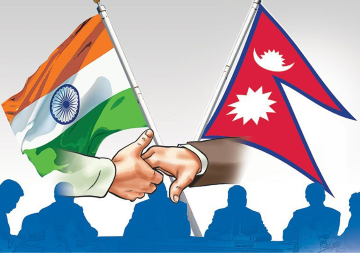
The India-Nepal "Peace and Friendship Treaty of 1950" has always been a bone of contention between the two neighbours. Extensive discussions at different forums and platforms have been held and the issue analysed from all possible angles......more

Which came first, defence deals or middlemen?
Deba R Mohanty
3 May 2008

Addressing a press conference at Def Expo 2008, defence minister AK Antony vowed that there was no place for middlemen in defence deals. He had earlier set an example by scrapping a couple of mega multi-billion dollar defence deals for 197 medium lift military helicopters and a major artillery gun deal.....more

REPORT

Vice President releases Indian Army Vision 2020
6 May 2008

Indian Army Vision 2020, the new publication of Observer Research Foundation, was released in Delhi on Tuesday (April 29, 2008) by the Vice President of India, Mr. Mohammed Hamid Ansari.

The concise and comprehensive book on the Indian Army has been written by Brig. Gurmeet Kanwal (Retd.) and published by HarperCollins India....more

SOUTH ASIA WEEKLY ASSESSMENT

Vol I, Issue 17
SOUTH ASIA WEEKLY
4 May 2008

The US State Department, in its latest report on terrorism, came down heavily on LTTE for its extortionist activities. The terrorist group, despite world-wide ban on its various activities, has been raising funds by forcing business houses to pay tax in areas they dominate....more

ISSUE BRIEF

International Human Rights Standards: How Does India Measure Up?
Dilip Lahiri
3 May 2008
 
China’s fulsome praise for India’s human rights record on April 14, 2008 in the first session of the UN Human Rights Council’s new system of Universal Periodic Review (UPR) would have come as a respite for the Indian delegation even as India was being subjected to hard and searching questions on torture in police custody......more

MONOGRAPH

Caspian Pipeline Politics, Energy Reserves and Regional Implications
By P.L. Dash
ORF-Pentagon Press
29 April 2008 
 
The Caspian region is endowed with enormous offshore and onshore hydrocarbon resources, but their access to world markets is limited. Following the disintegration of the Soviet Union, the number of claimants to the Caspian Sea has increased from two to five States. Besides Iran and Russia, who shared the Sea through the erstwhile Soviet Union, Kazakhstan, Turkmenistan and Azerbaijan are the three new actors.....more

ORF OCCASIONAL PAPER   

Dialectics of the Afghanistan Conflict How the Country Became a Terrorist Haven
Deepak Tripathi
 
The last three decades of the twentieth century were a period of intense conflict between competing ideologies. That conflict was played out in Afghanistan. The clash of capitalism and communism, both essentially Western ideologies, magnified the internal divisions within the tribal system in Afghanistan. This paper looks at the chain of events during the Cold War and examines the impact of East-West rivalries on Afghanistan. It provides a historical analysis of the rise of the Islamist group, Taliban, and the country’s transformation into a terrorist sanctuary......more

ORF DISCOURSE

Vol. 3 Issue. 2
Does the War on Terror Strengthen the Idea of Pakhtoonistan?
Saeed Naqvi
15 March 2008
 
On the eve of the February 18 elections, no two people in Islamabad, Lahore and Karachi were agreed on the certainty of elections taking place. Elections cannot take place, it was argued then, because the establishment will not risk an open-ended process which might produce inconvenient results. In the Pakistani context, the establishment has always meant the Army, the bureaucracy, big landlords and the United States......more

ANNUAL REPORT

ANNUAL REPORT 2007

Observer Research Foundation (ORF) is an endeavour to evolve and aid informed policy formulation for building a strong and prosperous India. The expectations of the global community from India are immense as the country is poised to play a leading role in the knowledge age. ORF believes that in the next 25 years India will be one of the world’s great economic powers and contribute to a significant transformation in the quality of life of humanity.

ORF complements official initiatives by exploring policy alternatives. It provides informed and valuable inputs for decision-makers in the govern-ment, civil society and business leadership of India. ORF’s expertise and resources are dedicated to nation building and international cooperation. ORF pursues its goals through in-depth research and stimulating discus-sions. Observer Research Foundation seeks active cooperation from those who share this vision in a spirit of genuine partnership.

Building Partnerships for a Global India is our motto.....more 


Login
Username :
Password :
Forgot Password?
New User SignUp
© 2007 Observer Research Foundation. All Rights Reserved.